

Journal
The language of the heart
What that tells us about closeness across languages.
By ProFluency Journal. Published 16 October 2026.
If you live in more than one language, you’ve probably felt the split.
Jokes land in one tongue. Anger shows up in another. I love you can feel heavier in the language of childhood, even when the later one is fine for work, travel, and the supermarket queue.
That doesn’t mean you’re bad at Spanish, or English, or whichever came second. Researchers who study bilingual emotion have been writing about this for years — and their findings are gentler than the shame a lot of learners carry.
Why the first language often feels closer
Jean-Marc Dewaele asked multilingual adults where their feelings live. A familiar pattern kept turning up: even very fluent speakers often reach for their first language for anger, intimacy, and the voice in their head — and they rate that language as emotionally stronger.
In related work, Dewaele looked at the emotional weight of I love you across multilinguals’ languages. For many people, the phrase doesn’t feel the same in every tongue. Childhood, first relationships, and the places where love was practised all leave a mark. That isn’t romantic folklore. It’s how language and life braid together.
Aneta Pavlenko found something similar with bilingual parents. The language that feels like “home” shapes what you reach for with children — praise, discipline, the sentences that matter. Parents don’t always choose the language that would be “useful.” They choose the one that can carry the feeling without slipping.
None of this means a later language stays forever cool. Dewaele also shows how a second language can become a language of the heart if you live enough life in it — grief, friendship, a kitchen that runs on that tongue. Feeling can move. It just doesn’t move on an app’s streak calendar.
Distance can help — and get in the way
Boaz Keysar, Sayuri Hayakawa, and Sun Gyu An found that thinking in a foreign language can take some of the heat out of decisions. People get a bit more distance. The framing tricks that work in a native tongue lose some of their grip.
At a dinner table, that cuts both ways.
It can make practice easier. The words feel less exposing. You can try a sentence without dragging your whole childhood into the room. For some learners, that cooler temperature is a gift: they can talk about hard things with a little less flood.
It can also make intimacy harder. The tender stuff stays in the stronger language. The second one gets the logistics. Partners and in-laws hear competence, and miss the heart. You sound fine. You don’t feel fully there.
If you’ve ever said something important in your second language and felt oddly flat afterwards — or said it in your first and felt too much — you’ve touched this effect from the inside.
What the split feels like at home
Maybe you argue in English and make up in Spanish. Maybe humour only works in one direction. Maybe your partner’s parents get the polite self, and your oldest friend gets the real one, because the languages don’t share a childhood.
None of that means the relationship is broken. It means the room has more than one emotional climate. The work is noticing which climate you’re asking someone to speak from — and whether you’ve left them a way back if the first try stalls.
Learners often blame grammar for what is really an emotional gear change. You’re not only retrieving vocabulary. You’re choosing which version of yourself walks into the sentence.
What helps when love is bilingual
Keep both languages on the table. A Spanish question with English underneath isn’t a crutch. It’s a bridge. It tells the room that meaning matters more than performance.
Let people answer where the truth shows up first. If they want, they can try the other tongue for one sentence after. Don’t score the evening. Don’t correct mid-feeling unless they asked you to.
If you’re the more fluent one, leave space. Finishing someone’s sentence can look like kindness and feel like being erased. Wait. Nod. Ask dime más when the first line is still polite.
If speaking freezes you, write first. Feeling often arrives on the page before it arrives in the air. Then say one line out loud to a real person — not a perfect paragraph, one true sentence.
When the topic is tender, lower the stakes around accuracy. A broken sentence that is honest beats a clean sentence that hides. Fluency practice can wait for the travel phrases and the shop. Closeness wants permission more than polish.
Fluency is useful. Being understood is the point.
A small practice for the week
Pick one person you love across a language. Ask one question that needs a person, not a performance — something about home, belonging, or a memory that still sits near the surface. Offer the question in both languages if you can. Let the answer arrive however it arrives.
If they switch mid-sentence, follow them. If they pass, let them. If they cry, or laugh, or go quiet, stay. The research on emotional language preference isn’t a script. It’s a reminder to treat hesitation as information, not failure.
A last word
I’m not saying Spanish will rearrange your emotional life, or that cards can do the work of therapy. Only this: language choice is part of closeness. When someone hesitates, they may not be hunting for a verb. They may be choosing which self to speak from.
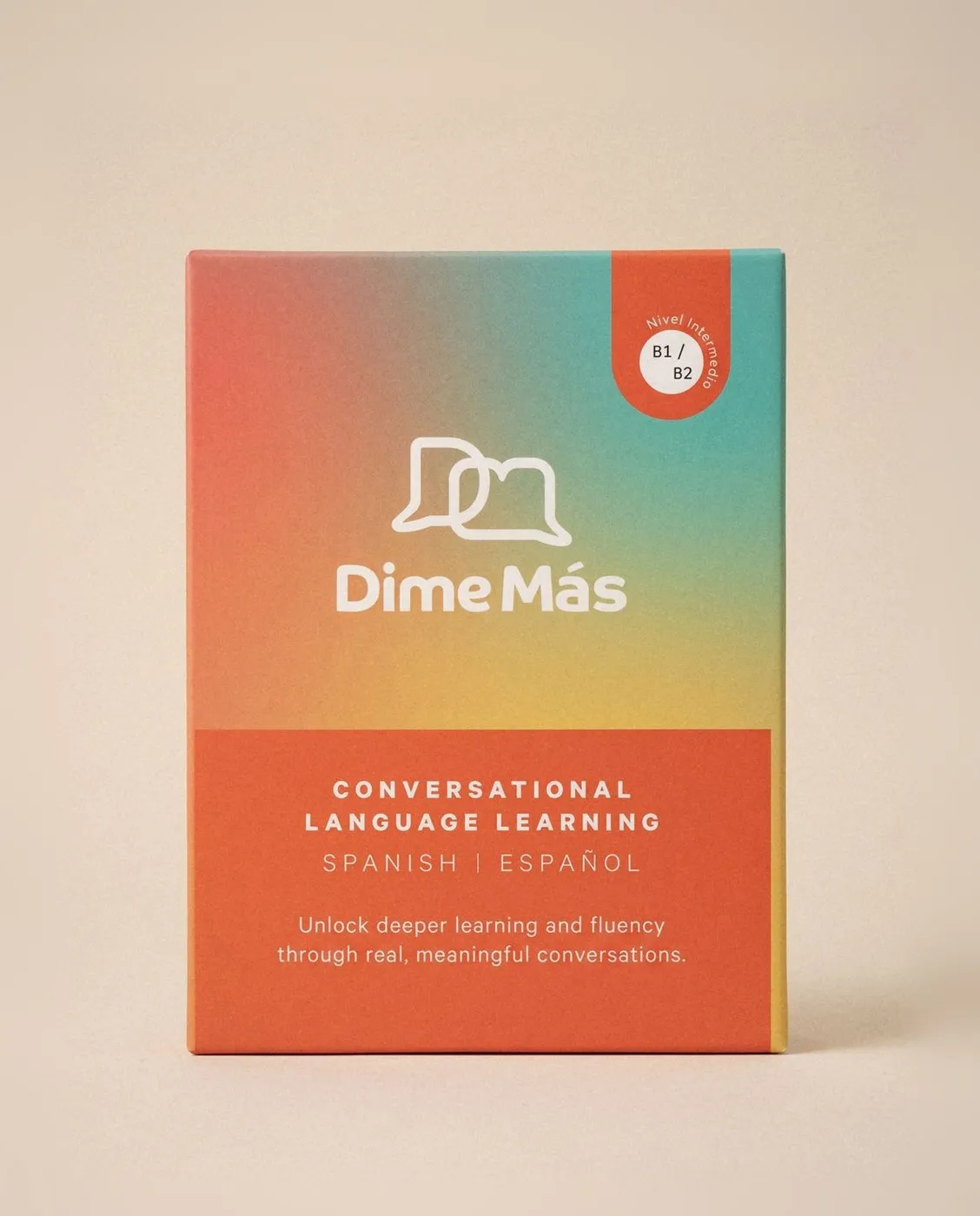
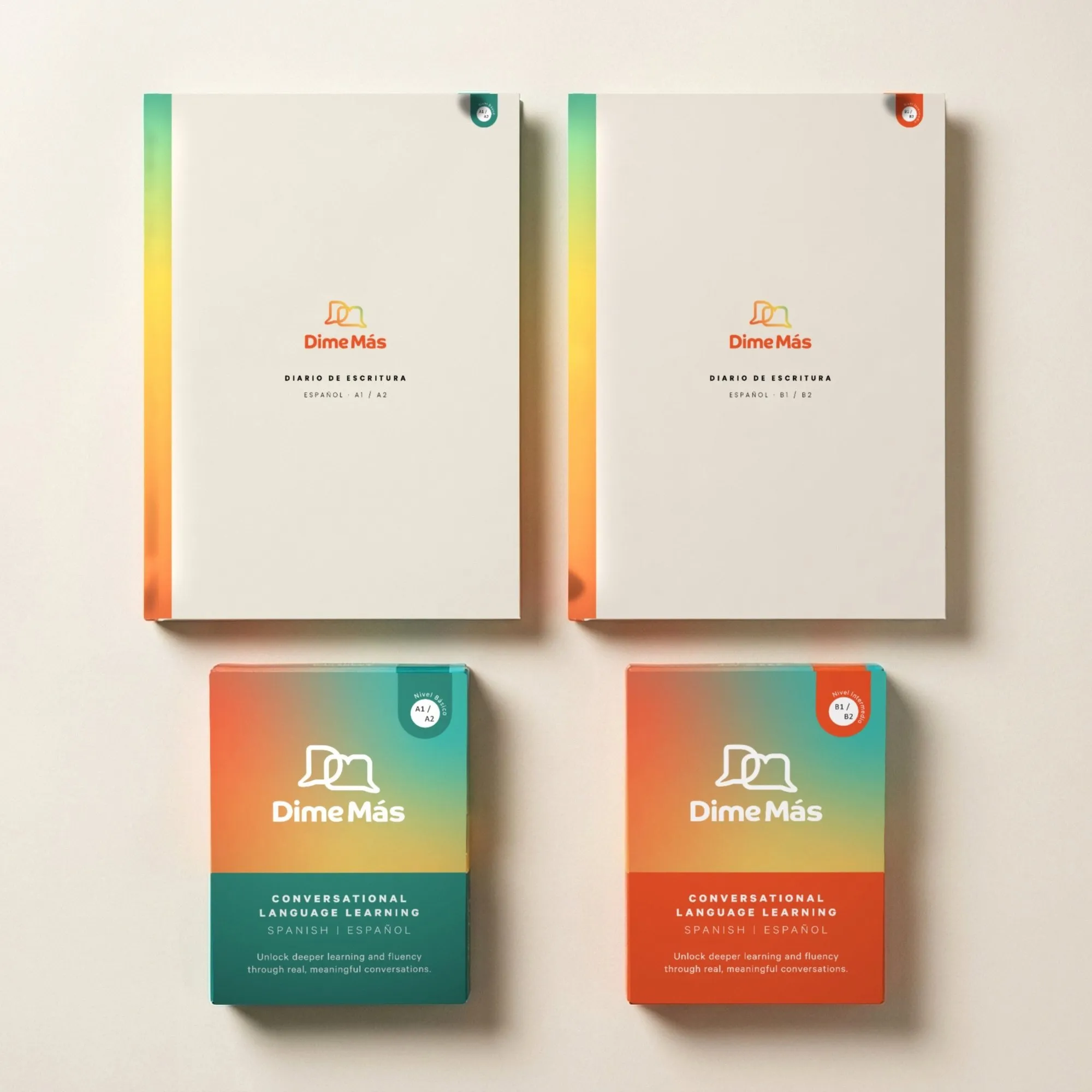
ProFluency makes tools for tables where more than one language is welcome. Dime Más puts the question in Spanish and English, so the room can meet in the middle — without pretending that every word feels the same in every tongue.
Ask one tender question this week. Let the answer arrive in whichever language it needs. Stay for the translation if it comes.
Every article is built on published research and checked against the original study. Edited by Cameron Graham.
Related


A question
In which language do you say the hard true thing?
Get the next one by email →