

A1 to B2: what the Spanish levels actually feel like in conversation
By ProFluency Journal. Published 15 October 2026.
A1, A2, B1 and B2 come from the Common European Framework of Reference for Languages, the CEFR, which is published by the Council of Europe. It describes what you can do with a language rather than how many words you know, so the levels mean the same thing whatever you’re learning. If you’re a Spanish speaker working on your English, B1 means just the same for you.
We’ve got a full guide to the levels on the site, with what you can talk about at each one and a short check to find yours. This piece is the other half of that. It’s about what the levels tend to feel like when you’re actually sat across from someone, which the official wording doesn’t really get at.
My examples are Spanish because that’s the language I learned, by living in Spain, and I’m still somewhere in the middle of the scale. If you’re learning something else, swap your language in as you read. I’d be surprised if it felt very different.
The label and the feeling don’t always match
You can be told you’re B1 and still feel like a beginner the moment a real conversation starts. You can also be much better than you think, because the part of your brain marking your own mistakes is far harsher than the person you’re talking to. Both of those are normal. A level describes what you can usually manage when people are being reasonably patient with you. It says nothing about how curious you are or how well you listen, and those count for a lot at a table.
What each level tends to feel like
At A1, most sentences get built in your head before they come out. You ask something you’ve practised and then quietly hope they don’t ask anything back. That’s fine. A good conversation at this stage is one where you said something true and let a pause sit there while you found the next word. Questions about home, family and food are your friends, and having the translation right beside you is what keeps it fun rather than stressful.
A2 is where a lot of people feel stuck, and I think it’s because errands and conversations are different skills. You can buy a train ticket without a second thought and then freeze completely when someone at dinner asks what you think about something. It helps to practise with questions about people, and to keep your answers short on purpose. A short answer that’s true does more for you than a long one that falls apart halfway.
B1 is the strangest one, because you understand so much more than you can say. You follow the whole story, laugh in the right places, and then can’t find the words to add anything of your own. I’ve missed my share of punchlines at tables in Spain, and the best thing I learned to do was ask. ¿Qué ha dicho?, what did they say? It beats nodding along and hoping nobody notices. A lot of people at B1 tell everyone they’re “not fluent yet” while happily chatting for an hour at a time.
At B2 you can keep going for a long time, mistakes and all, and people follow you. You’d think the nerves would be gone by then, but they still turn up at a partner’s family lunch, in a meeting or when the subject gets personal. What changes is that you’ve got more ways round a sentence when you get stuck. The questions worth practising with at this point are the ones that go past small talk into memories, belonging and the things you don’t usually say out loud.
Why your level can wobble
A level that holds up fine in a café can fall apart at a busy family table. Everyone’s talking at once, the jokes overlap and you badly want to fit in. That doesn’t mean your level was wrong, just that the setting matters more than people expect.
If you know one of those meals is coming, practise one or two questions beforehand with the translation nearby, and agree with your partner how much help you’d like. Questions that ask for a story are easier to follow than ones that ask for an opinion when a table is moving fast. Afterwards, judge the evening on whether you asked something and listened to the answer.
Picking the right box
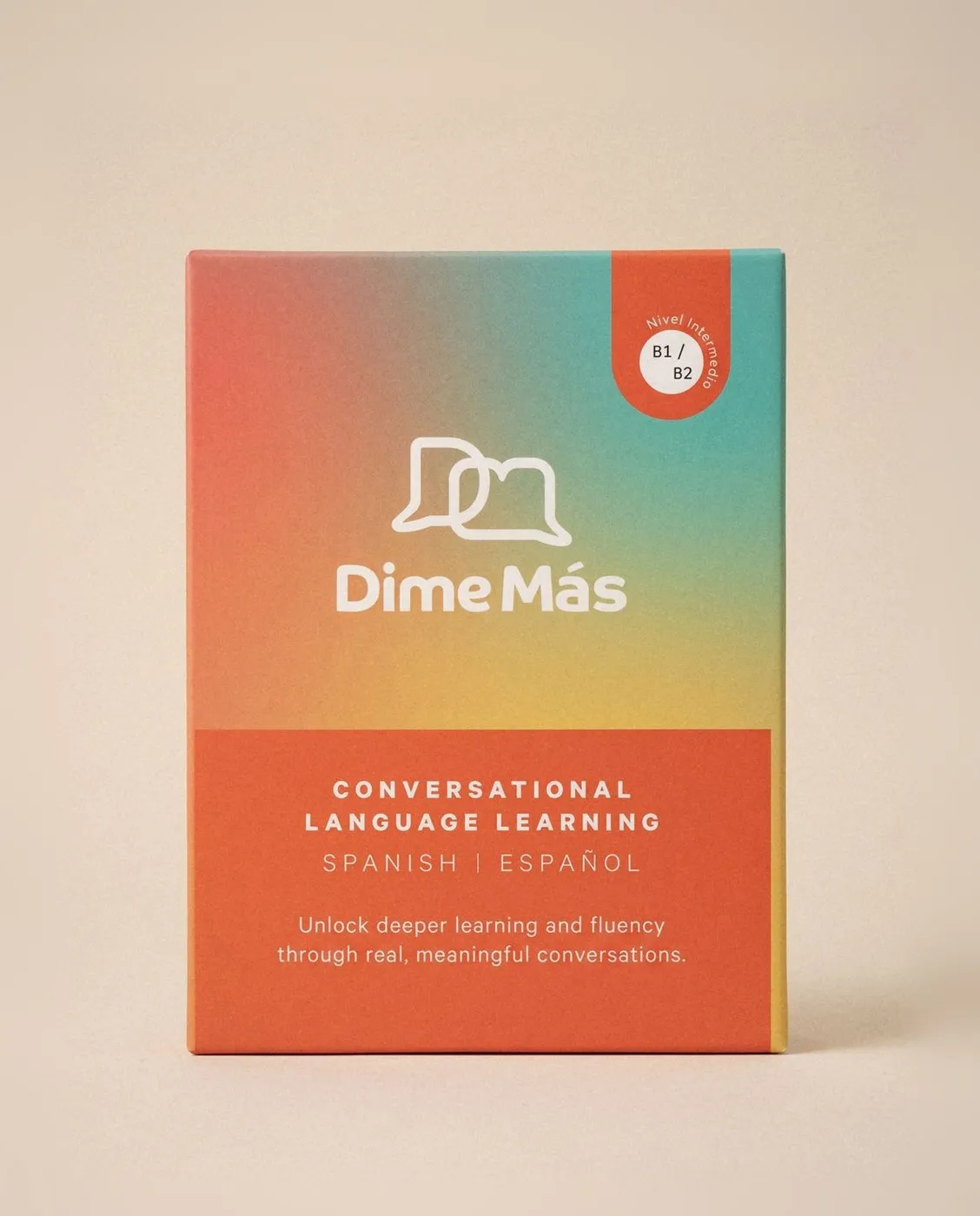
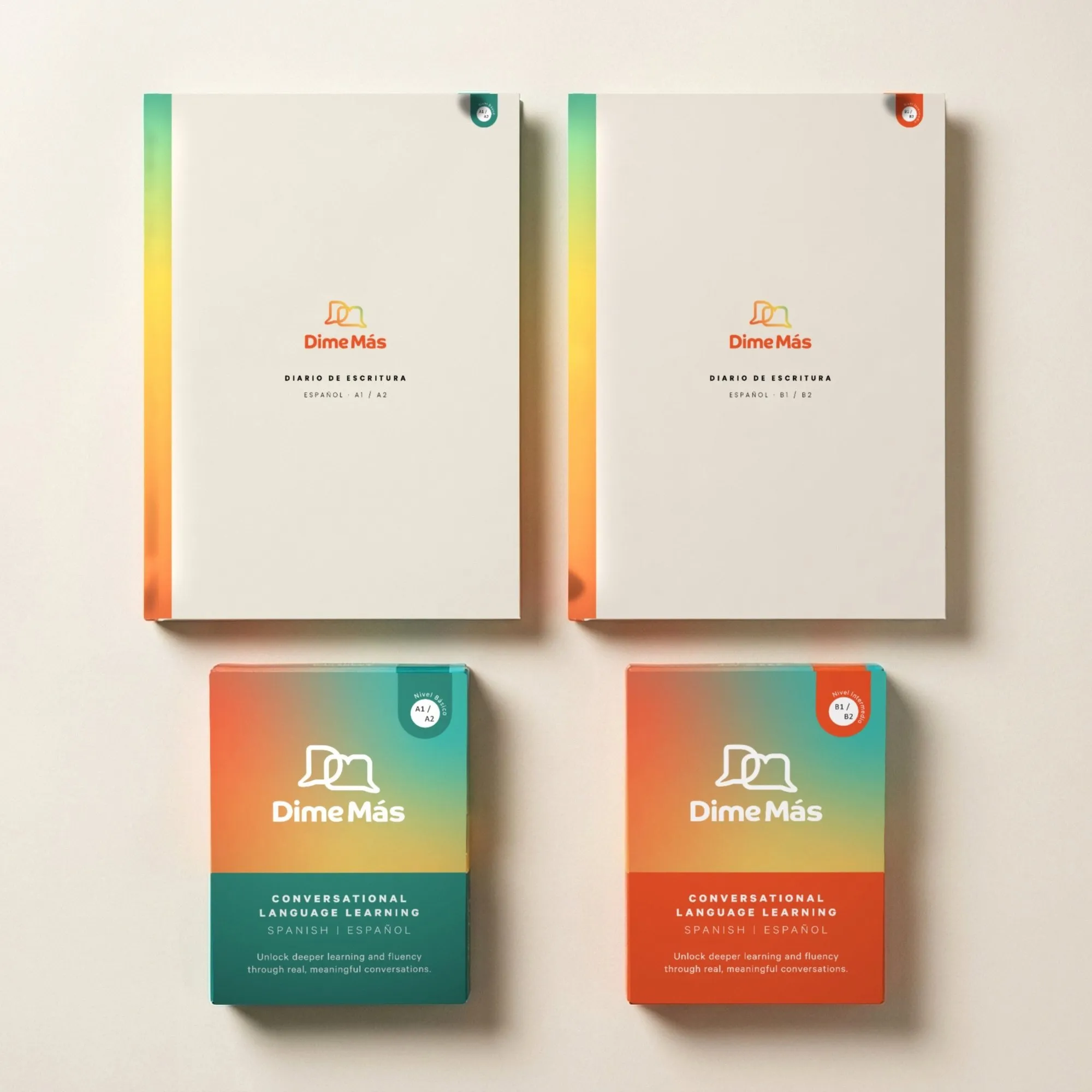
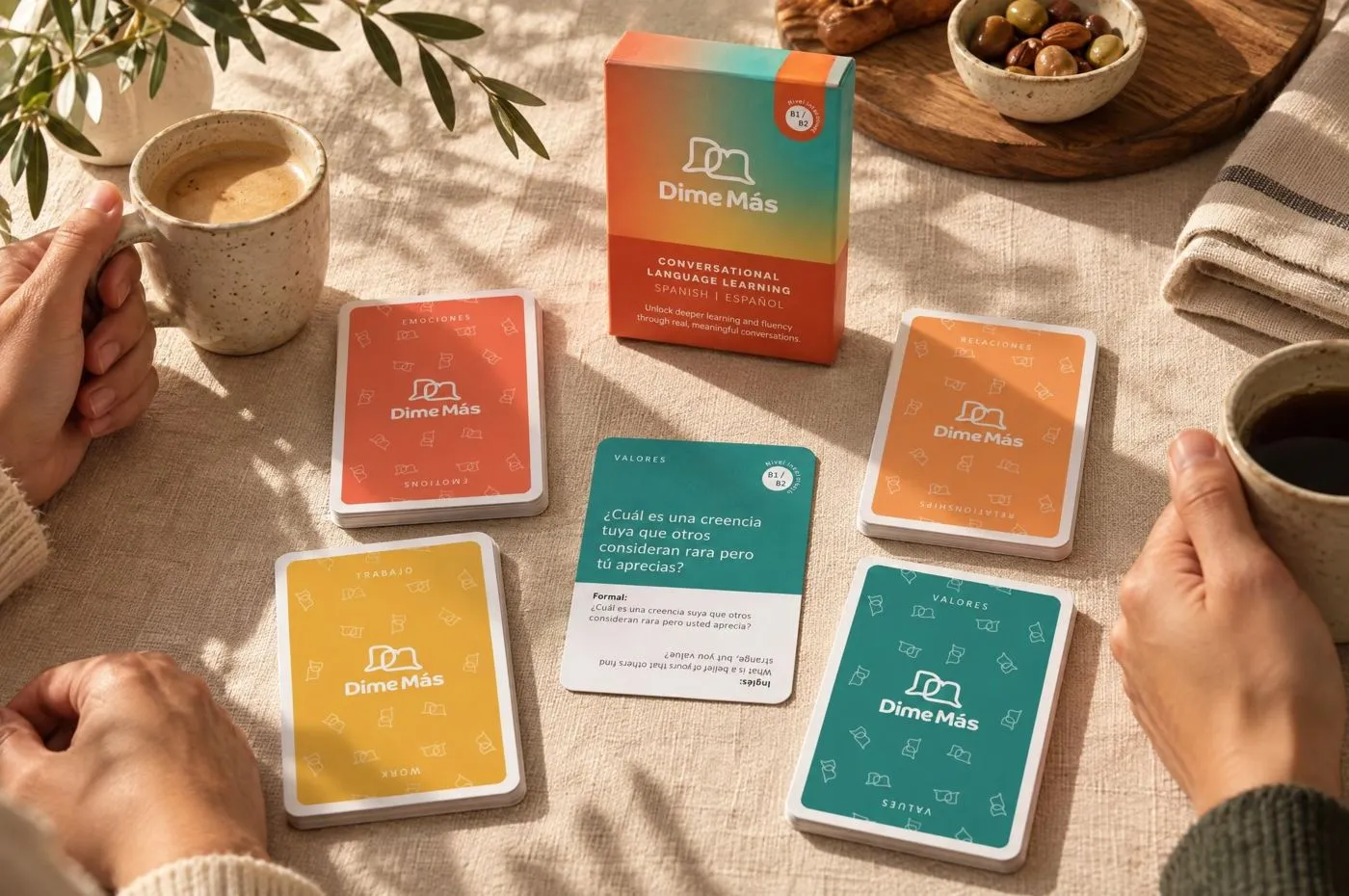
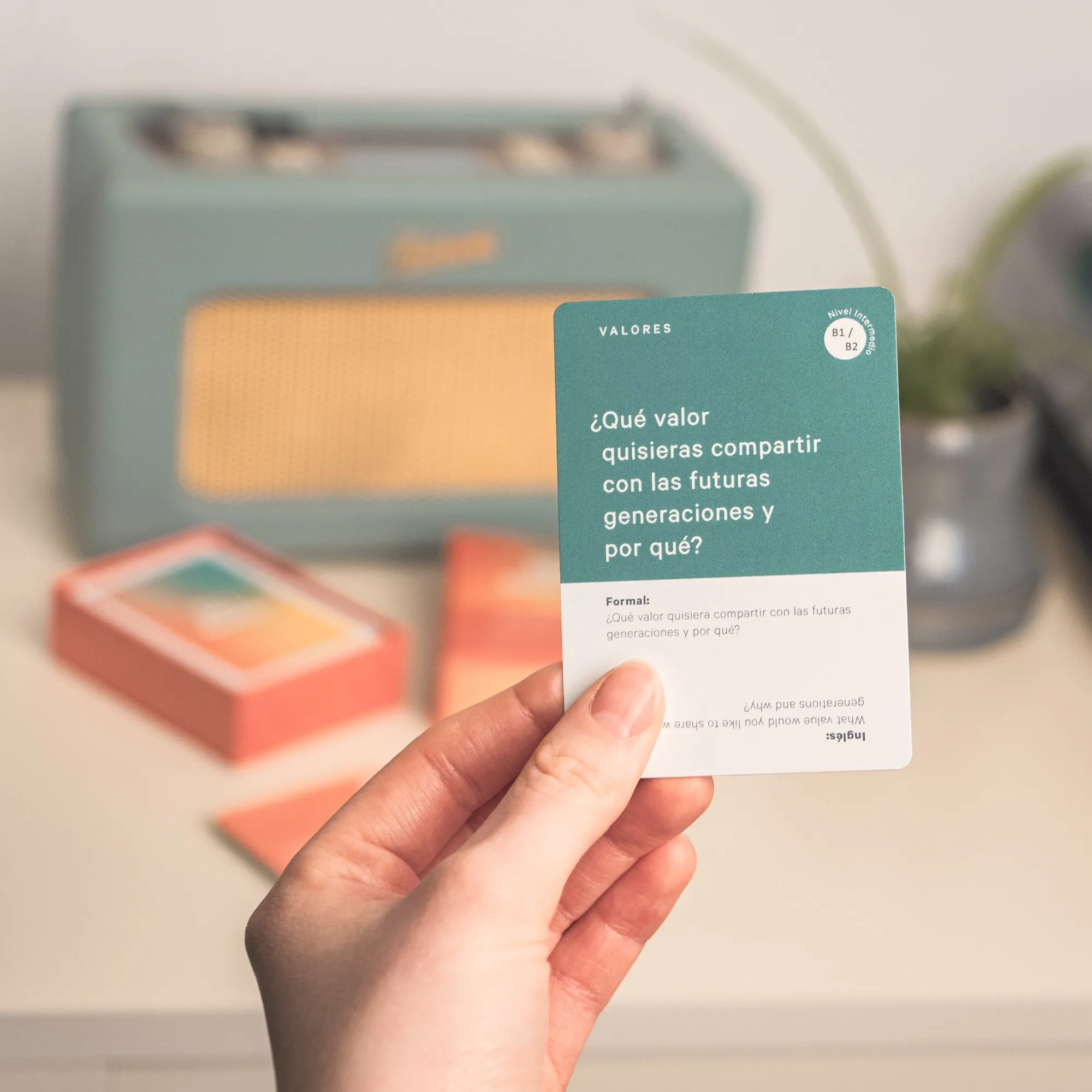
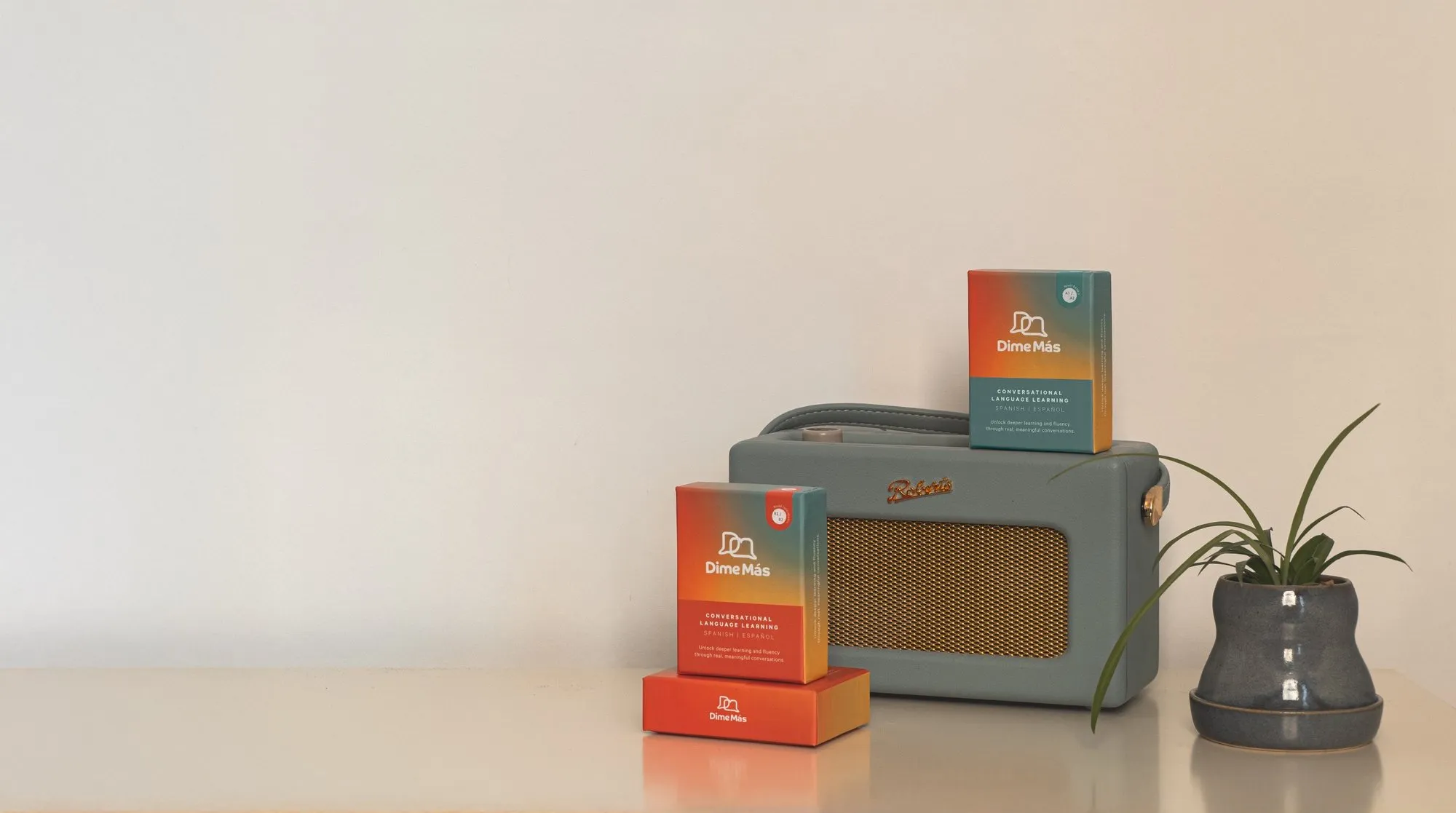
This is where the labels earn their keep. The Dime Más intermediate cards are for B1 to B2, for people who can already chat and want to go further, with each question in Spain Spanish and the English on every card. A beginner set for A1 to A2 is on its way.
If you’re somewhere between A2 and B1, the intermediate set will stretch you a bit, which is no bad thing as long as the English is there to fall back on. If you really can’t decide, I’d go by how you’d cope on a tired Tuesday evening rather than on the best day of your last holiday.
Two people at different levels can share a box perfectly well. Keep the English on the table, let each person answer however they can, and if you’re the stronger speaker, keep your answers fairly short so the other person gets room. And because every card has both languages, a Spanish speaker working on their English can use the same box the other way round.
Don’t wait for the next letter
The one thing I’d steer you away from is waiting until you reach the next level before you let yourself have a real conversation. Years can go by like that, with a great vocabulary and not much said out loud. Someone at A2 can still ask the question that changes how a whole evening goes.
If you need a level for an exam, for work or a visa, prepare for that exam on its own terms. But if what you’re after is dinner conversation that feels a bit less thin, a better question will do more for you than a higher letter. When you want the detail, the levels guide has it all in one place, including a quick check to see where you are.
Every article is built on published research and checked against the original study. Edited by Cameron Graham.
Related
A question
Which level sounds like you on an ordinary day, rather than your best one?
Get the next one by email →