

How to practise speaking a language at home, without a teacher
By ProFluency Journal. Published 15 October 2026.
Most advice about speaking a new language assumes you’ve got a class, an app streak or a trip booked. In real life, a lot of practice happens at the kitchen table after work, with a partner who’s tired, or on your own.
Everything I say here comes from learning Spanish. I picked it up living in Spain and I’m still learning, so Spanish is the one I know from the inside. Practising at home looks much the same whatever you’re learning, though. If you’re a Spanish speaker working on your English, swap the examples round and it all still applies.
This isn’t a method, just a way to use the words you’ve already got. Home is where most of your life happens, and if the language never comes into that room, it stays something you only use on holiday.
Why home is awkward
At home the other person already knows you, so small talk feels a bit pointless. You slide back into your first language because it’s quicker, which is completely normal. Trying harder won’t fix that. A question that’s worth answering in either language usually will.
Keep the English on the table if you need it. Stay in the new language for as long as it holds, and when it breaks, finish the thought in English and come back. Fluency isn’t a switch you flip, it’s a habit of coming back.
There’s another reason home practice fizzles out, which is that nobody wants dinner to turn into a lesson. So keep it relaxed. One question, ten minutes, nobody keeping score. If it starts to feel like homework, you’ll both find reasons to skip it by Thursday.
Ten minutes and one question
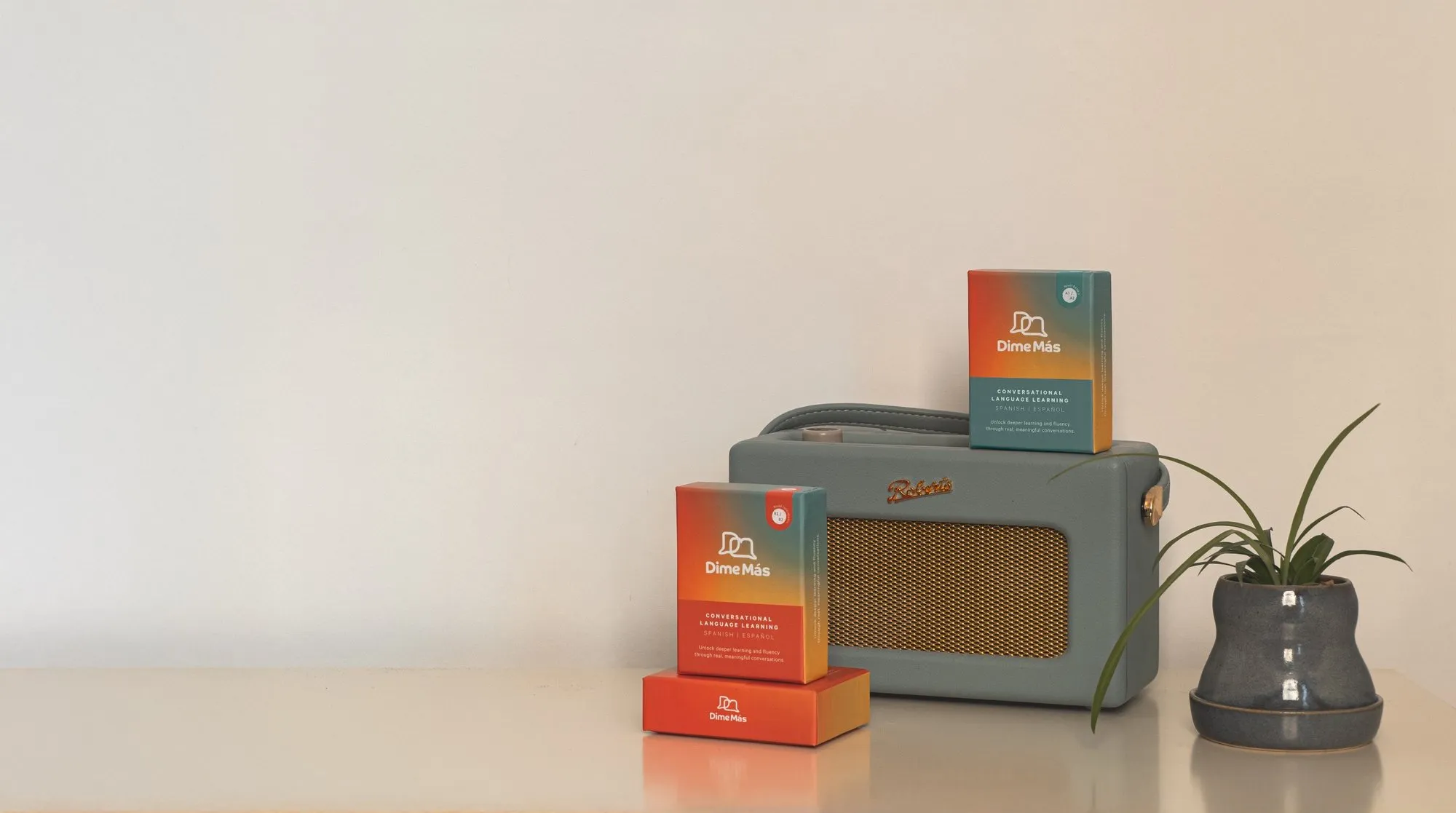
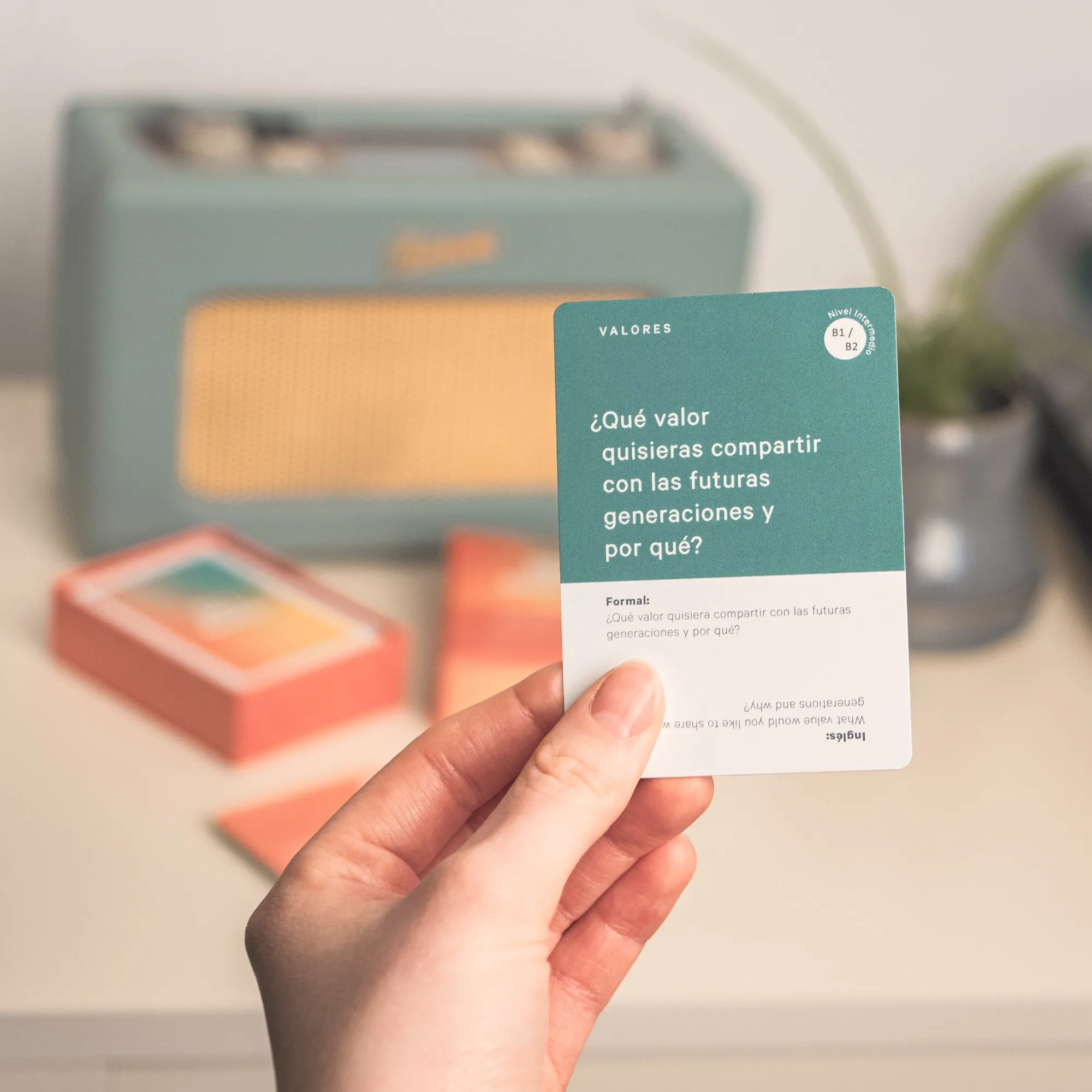
Put the kettle on and pick a question. Read it out in the language you’re learning and answer in it for as long as you can, then finish in English if you have to. Ten minutes is plenty. A whole evening of drills is how speaking starts to feel like a chore.
If you live on your own, say the answer out loud anyway. Writing it down is useful, but hearing your own voice is the bit that usually goes missing. It can feel a bit daft talking to an empty flat. It still counts, and your mouth needs the practice even when nobody’s listening.
On your own, something like this is enough. Read the question aloud and answer it with three short sentences, even clumsy ones. Make a note of one word you reached for and couldn’t find. Then stop, before you end up with six tabs open.
If you miss a day, it doesn’t matter. Just pick it up again.
Who you can practise with
A partner who doesn’t speak the language can still hold the card, read the English and listen. They don’t need to correct anything. Their job is to wait through the pause and ask you to tell them more when your first answer is still a bit polite.
A housemate can swap questions with you. A parent might put up with one question a week on the phone, and a friend from a language exchange can do the same from their own kitchen. You don’t need a native speaker in the room for your first sentence. You need someone who won’t jump in and finish it for you.
If nobody’s around, record a voice note and delete it afterwards. Nobody else ever needs to hear it. What matters is that a sentence you chose actually left your mouth.
Kids in the house change things. Keep it short and kind, and let them hear you try without making them an audience for your nerves. Sometimes the best time is one question after they’ve gone to bed.
What to do about mistakes
Don’t record yourself unless you actually want to, and don’t score the evening. If a word won’t come, say it in English and carry on. You’re after a real answer, and a tidy paragraph can wait.
Corrections are useful when someone has asked for them. Being corrected over dinner when you didn’t ask is how people stop talking. If you’re the stronger speaker, leave some space. Nod, wait, and ask them something else about what they’ve just said, rather than about their grammar.
When you notice the same gap three times, maybe a verb, a time phrase or a word for a feeling, write it down once. Then use it in your next answer on purpose. Coming back to a few words deliberately does far more than a long list of things you think you ought to learn.
A shape for the week
One shape you could try goes like this. On Monday, answer one question out loud. Midweek, write your answer to the same question in a notebook. On Friday, ask someone else that question and listen to what they say.
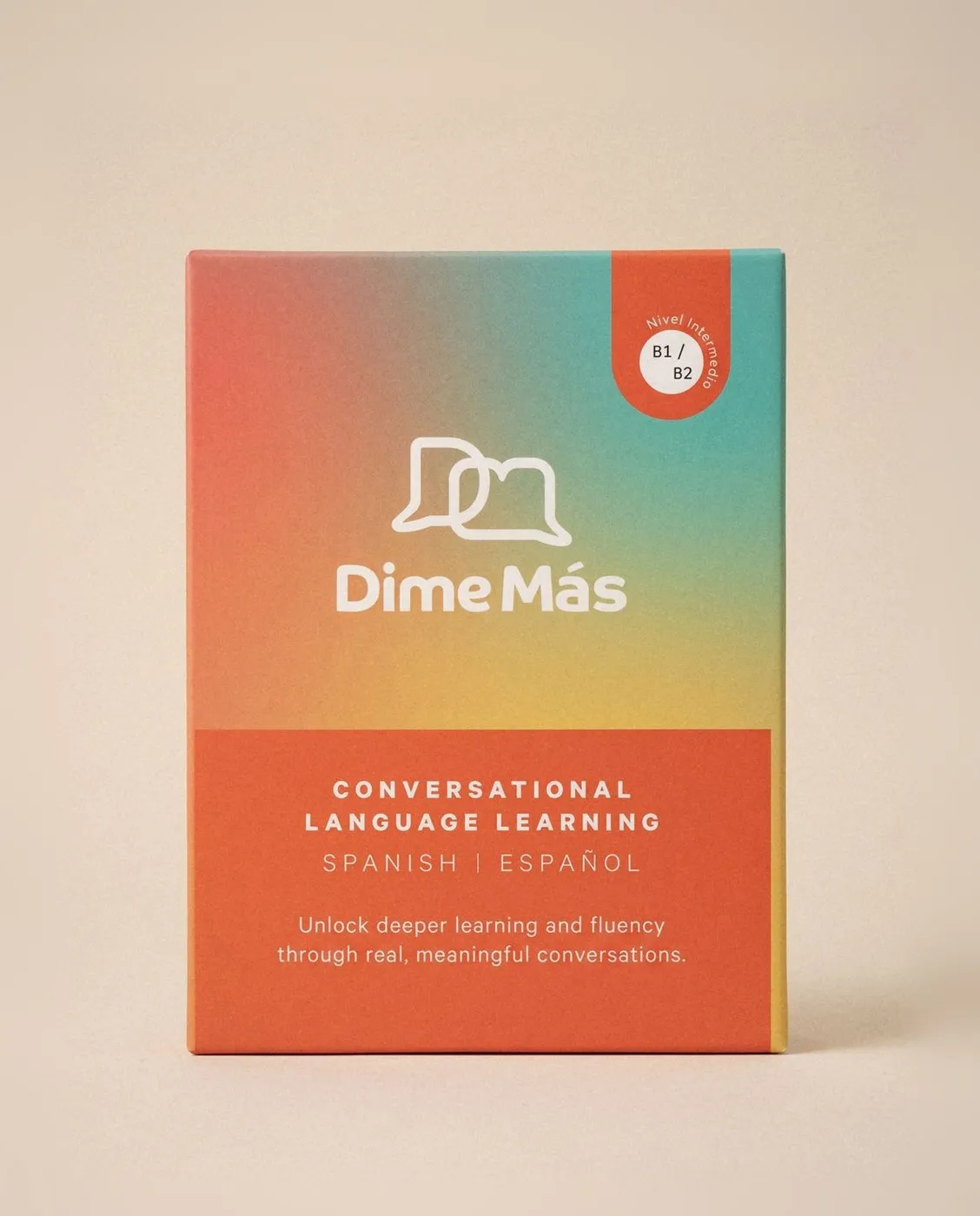
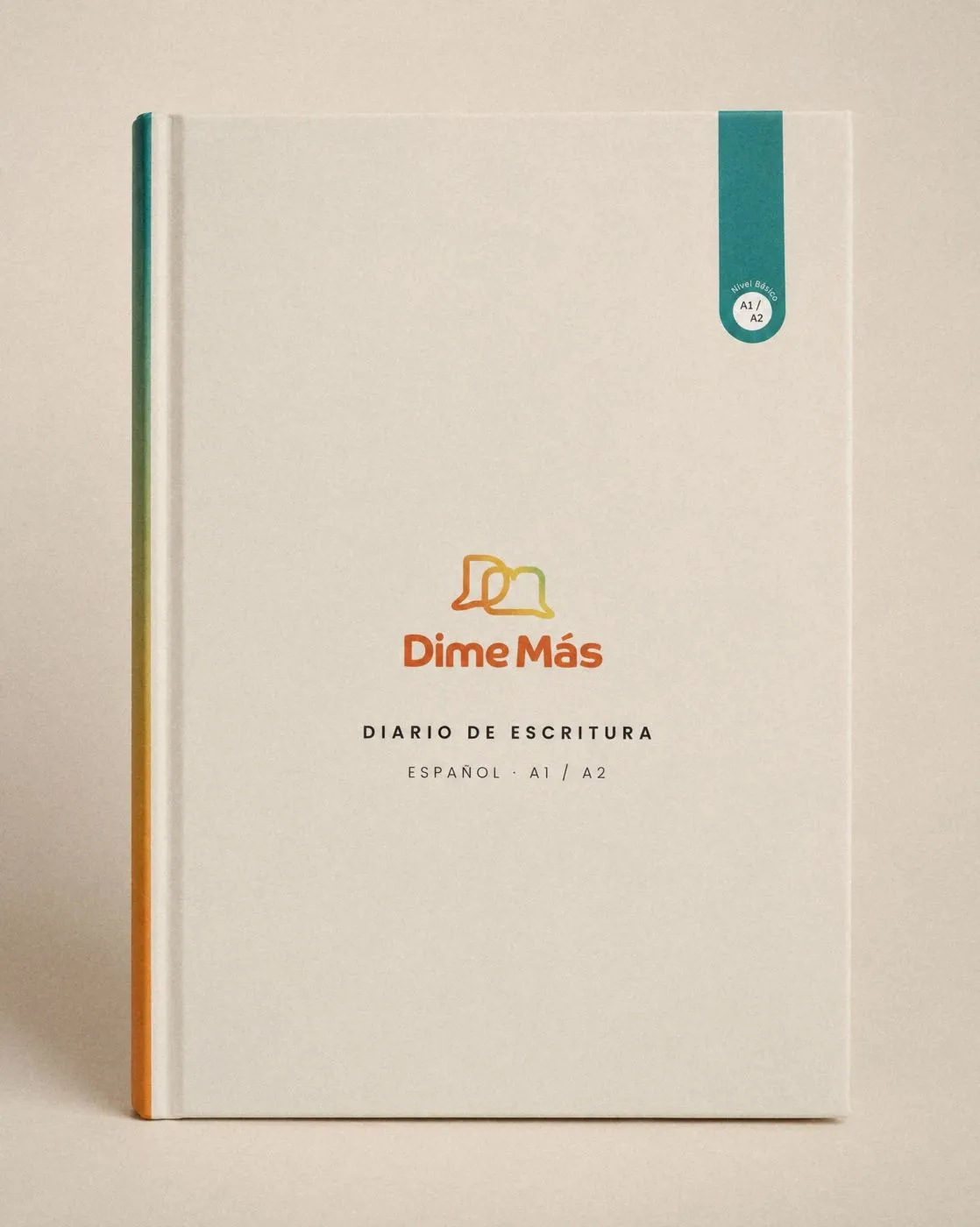
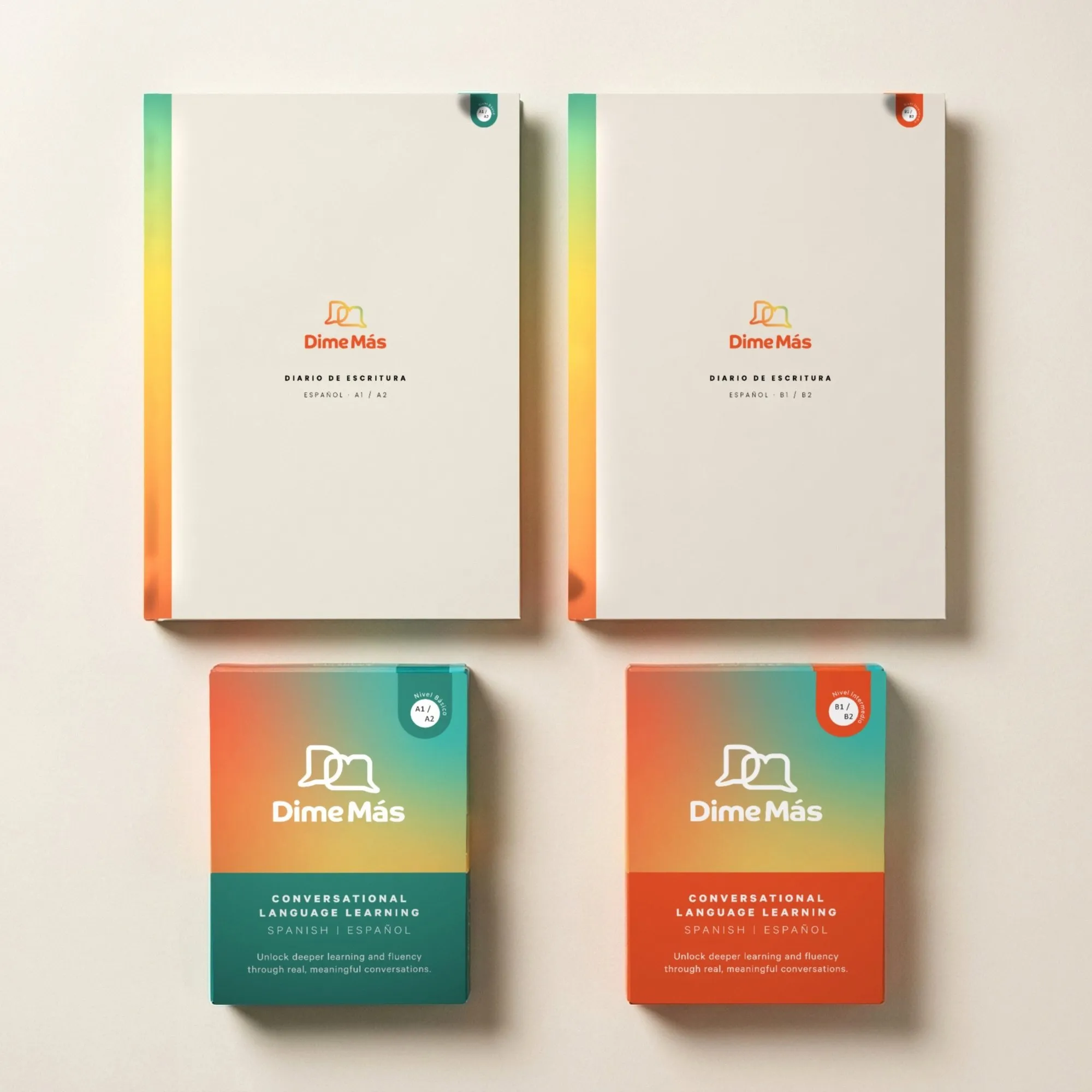
For some people the writing step really matters, because they find the words on paper before they can say them. If that’s you, the Dime Más Journal is being made with you in mind. It’s coming soon, with twenty weeks of prompts to write and then say out loud. Until then, a notebook does the job.
If asking someone new on Friday feels too exposing, ask the same person who heard you on Monday. Familiar ears are kinder, and you can widen the audience later once the sentence has had a bit of practice.
Fit it around what you already do
You don’t need to stick labels on the furniture, unless you enjoy that kind of thing. It helps more to tie the language to habits you already have. Ask one question while the kettle boils, or answer one in your head on the walk to the shop. Tell your partner one sentence about your day before you switch back to English.
The idea is to get the language out of the app you only open when you’re feeling good about yourself and into the rooms you actually live in.
If you live with someone who’s learning too, don’t let it turn into a competition. Take turns, and be pleased whenever either of you gets a sentence finished, however it sounds. Comparing yourselves will shut you both up faster than any gap in your vocabulary.
When you get stuck
If you freeze, read the question in English first and then in the language you’re learning. If you still can’t get going, answer in English and translate just one sentence. That still counts.
Apps are fine for vocabulary, and podcasts and films are great for your ear, but none of them use your voice, and none of them will make someone look up from their plate. Mix them in if you like. Just don’t let all that listening become a way of putting off speaking for good.
If it keeps sliding back into English, make it smaller. One sentence starter and one true detail is enough. In Spanish, starters like hoy he…, today I’ve…, me gustaría…, I’d like to…, or no sé cómo decirlo, pero…, I don’t know how to put it, but…, are good ones to have ready. Every language has its own versions. Use them to get going, then say what’s actually true for you.
So this week, ask one question at home and give the answer some time. If you need questions, the question archive has plenty, with English first and your language beside it. And if you’d like a rough idea of where you are, there’s a plain guide to Spanish levelstoo.
Every article is built on published research and checked against the original study. Edited by Cameron Graham.
Related

A question
Who could you ask one question at home this week?
Get the next one by email →