

Why speaking another language feels so scary, and what helps
By ProFluency Journal. Published 15 October 2026.
If you’ve ever felt your face go hot halfway through a sentence in another language, you’re in good company.
I learned Spanish by living in Spain, and I’m still learning now. I’ve sat at tables there where I followed most of what was going on, knew roughly what I wanted to add, and then either kept quiet or said something safe instead of what I actually meant. So when I write about this, my examples come from Spanish, because it’s the only second language I can talk about from the inside. I don’t think the feeling belongs to Spanish though. A Spanish speaker trying out their English in a café in London is going through exactly the same thing, and so is anyone learning any language, wherever they started from.
One thing before I go on. I’m not a therapist and none of this is medical advice. If a fear of speaking is getting in the way of your everyday life, please talk to someone qualified. What I’m writing about here is the ordinary nervousness most of us feel when we’re new at something and other people are watching.
It’s rarely about the grammar
When I think back to the times I’ve frozen, it was hardly ever because I didn’t know a verb. It was because people were watching me while I looked for it, which is a very different problem.
The worries tend to be social ones. You don’t want to waste someone’s time. You don’t want to come across as less clever than you are in your own language. You don’t want to be corrected in front of everyone, and if it’s your partner’s family round the table, you really don’t want to stumble in front of them.
There’s another one that’s harder to put into words. You can start to feel that the real you only exists in your first language, and that everyone else is getting a thinner, more polite version of you. Your jokes don’t land in the same way and you can’t be as warm as you’d like to be. I think that one has more to do with belonging than vocabulary, and it’s worth going easy on yourself about it. Sounding like yourself in a new language takes a long time. Nobody manages it at the start.
What makes it worse
Some things make it worse, and it helps to know what they are. Courses that promise fluency in thirty days are one, because they make the gap between where you are and where you think you should be feel enormous. Being corrected halfway through a sentence in front of everyone is another. So is a big class where you get one turn to speak in an hour with twenty people listening, and so are apps that make you feel guilty for missing a day. Missing a day is fine.
Comparing yourself with other people is probably the worst of the lot. Someone who grew up with the language, or a friend who spent years abroad, is on a completely different timeline from you. If they’re patient with you, take the patience and leave the comparison.
What actually helps
The biggest thing for me has been a smaller audience. Talking with one or two people feels completely different from talking in front of a room. Somewhere between two and four people is about right, because everyone gets a proper turn and nobody feels like they’re on stage.
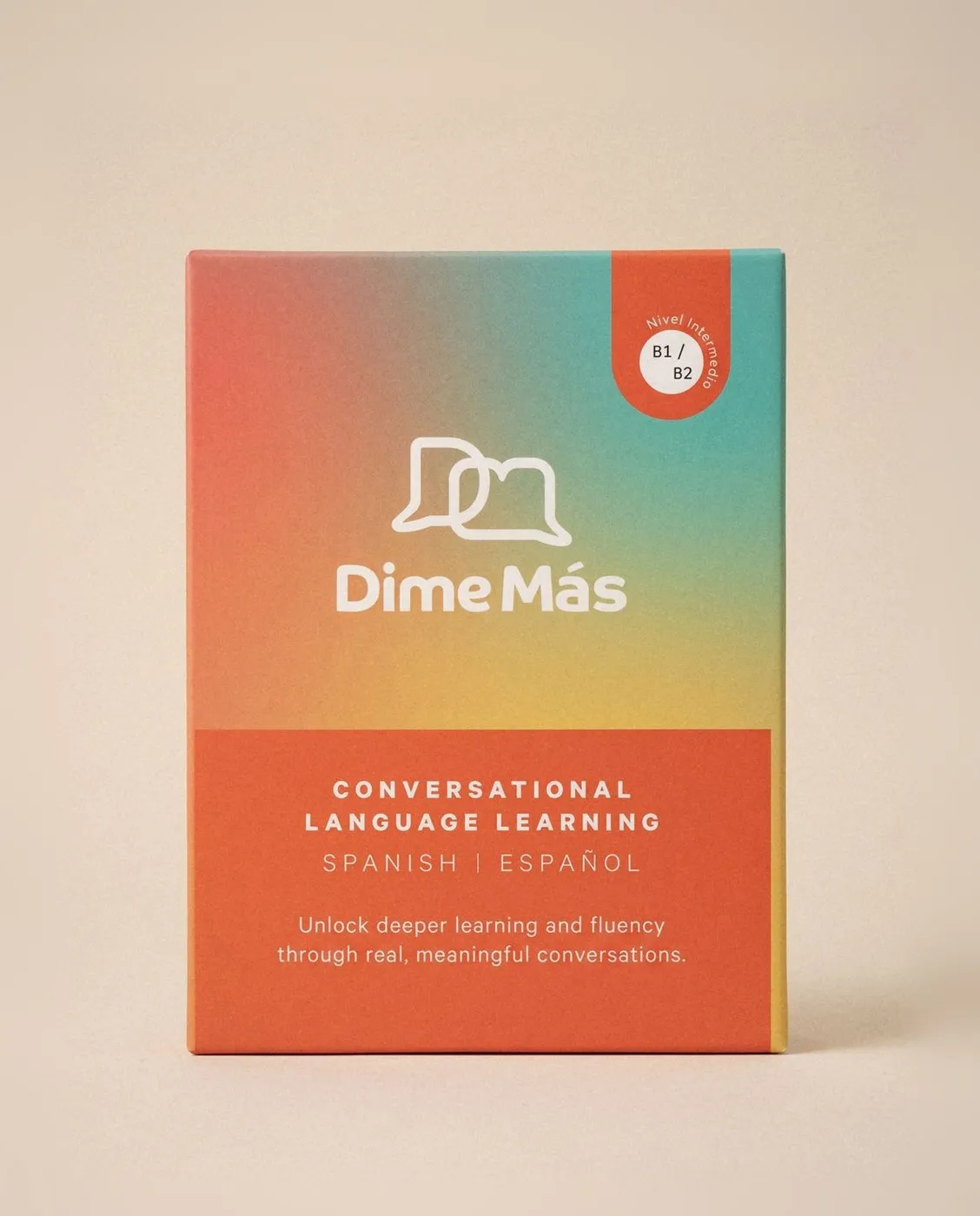
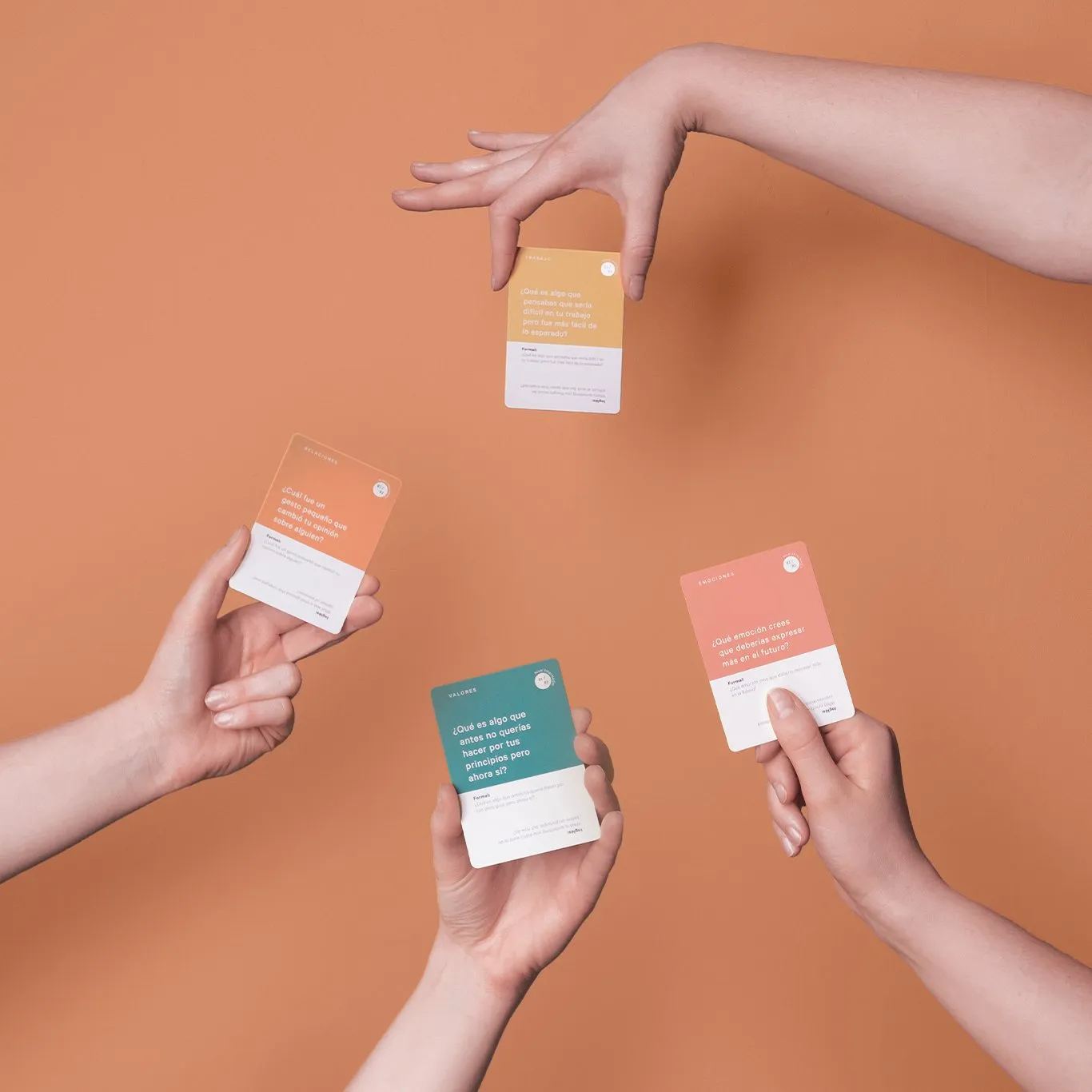
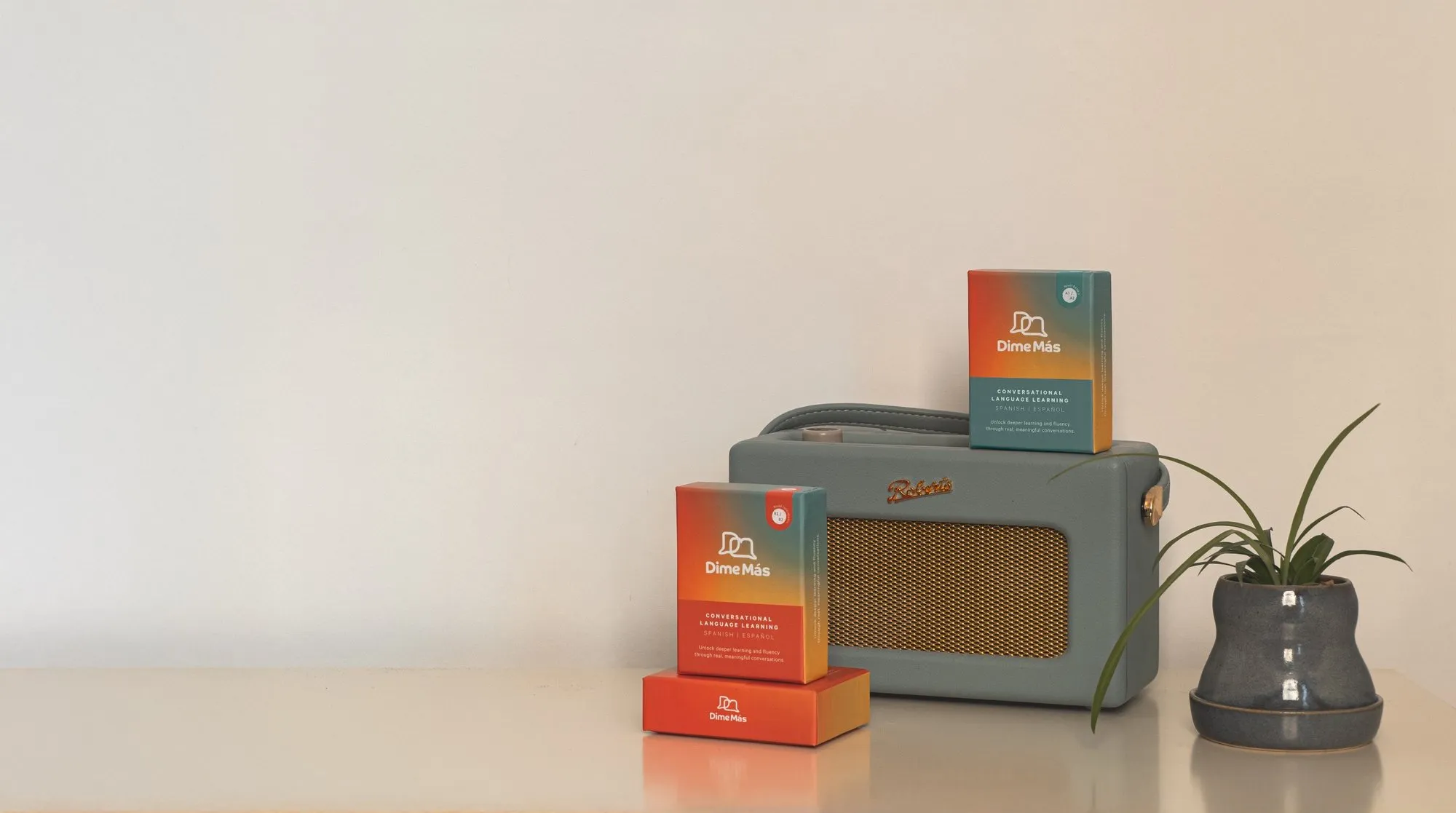
It also helps to have something real to talk about. A question about someone’s life gives you a reason to speak that has nothing to do with showing off your grammar, and you get so caught up in the answer that you forget to be nervous. That’s a big part of why Dime Más has the question in Spanish with the English on the same card. Nobody gets stuck, and anyone can switch for a word when they need to. It works from the other side too. If you’re a Spanish speaker practising your English, the English is right there.
Some people find it easier to write first and speak after. If that’s you, jot down what you want to say and then say it out loud. Other people like to listen for a long while before they say much, and that’s fine as well. Listening is part of being in a conversation.
Practising with people who already like you makes a big difference. Try a question out on a friend or your partner before you take it anywhere bigger. Once you’ve said something once, it comes out more easily the next time.
I also like having a physical card in my hand. You have to pick it up and turn it over, which gives you a second to look up at the other person and settle before anyone has to say anything. You can’t scroll past that moment the way you can on a phone.
A few ground rules if you’re hosting
If you’re the one bringing people together, it’s worth agreeing a few things at the start. Nobody finishes anyone else’s sentences unless they’re asked to. Nobody keeps score. Anyone can drop back into their own language for a word, and anyone can pass on a question. Say it once, keep it light, then ask the first question and give people time.
If you’re the strongest speaker at the table, the most useful thing you can do is wait. Jumping in to help can feel kind from your side and quite crushing from theirs. Let them get there. If what they’ve said is short and safe, ask them to tell you a bit more. Save any corrections for later, and only if they want them.
When you freeze
It’ll happen. When it does, just say so. In Spanish you can say se me ha ido la palabra, the word’s gone, and most people will smile because they’ve been there too. Every language has its own way of saying it. Use the word from your own language if you need to, or come back to it later. Freezing doesn’t mean you can’t do this. Usually it just means you care how you come across.
If it happens a lot and leaves you shaken for hours afterwards, that might be more than everyday nerves, and talking to a professional would be a sensible next step.
Partners, families and being watched
For a lot of people the fear is at its worst around the people whose opinion matters most. A partner, their parents, or a colleague who’s only ever heard you sound capable in your own language. Struggling in front of people who love you, or who pay you, can feel a lot worse than struggling in front of strangers.
If you can, talk about it beforehand. Ask your partner not to correct you at the table unless you ask, and to let you finish what you’re saying. If they want to tell you they’re proud of you, that can wait until you’re on your own. Small agreements like that take a surprising amount of pressure off.
And if you’re the partner in this situation, your job is mostly to be patient. Don’t coach unless you’re asked. Listen, and let them get there in their own time.
Something small to try this week
Pick one person and one question. Agree that switching language is allowed, give it ten minutes, ask, answer and stop. No recording and no going over it afterwards unless you both want to.
If that still feels like too much, make it smaller. Write one sentence down and say it out loud. Record a voice note and delete it. Then build up slowly, one extra person at a time. Pushing yourself too hard tends to backfire, and going gently is what usually sticks.
Over a few weeks you’ll probably notice the words coming a little quicker and with a bit less dread. Pay attention to what helps you, whether that’s a quieter room, a friend you trust, having the English there, or a walk instead of sitting across a table, and use it on purpose. That isn’t cheating, it’s how you keep going.
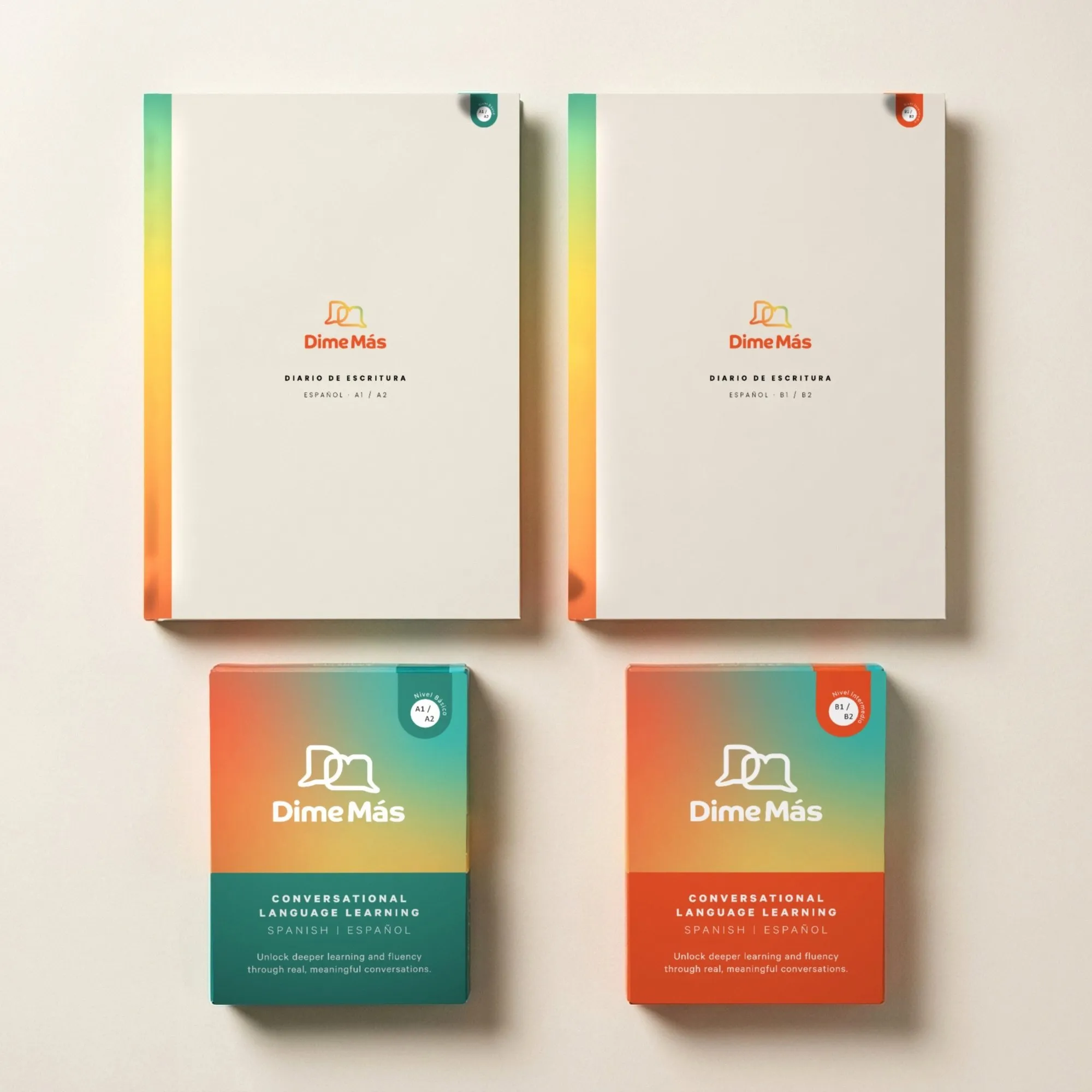
If you want somewhere to start, there are free questions in the question archive, with English first and your language beside it. And if you’d like a box of them for the table, that’s what Dime Más is. Either way, I hope you find the people you feel braver with.
Every article is built on published research and checked against the original study. Edited by Cameron Graham.
Related

A question
Who do you feel braver speaking with, and why do you think that is?
Get the next one by email →