


The question that turned dinner into a conversation
By ProFluency Journal. Published 1 October 2026.
You know the kind of dinner I mean. Everyone’s sat down, the food’s out, and the conversation is all passing things and checking plans. How was your day? Fine. What time are you off tomorrow? Half seven. Nobody’s doing anything wrong. It’s just that nobody’s really saying anything either.
Then someone asks a question you can’t answer with a nod. What would you miss if you moved away? Who taught you to listen? For a moment the table goes still, because everyone’s actually thinking about it.
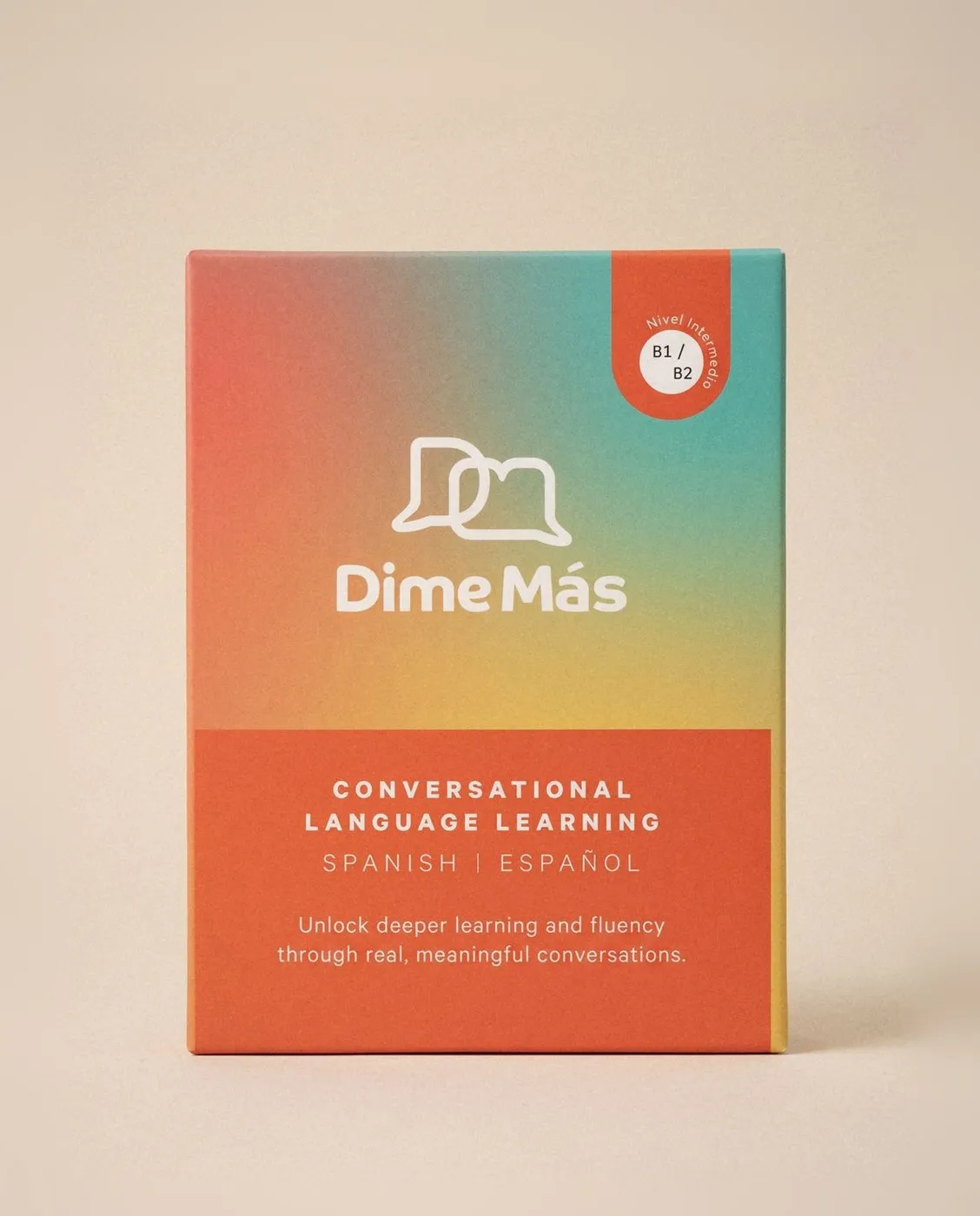
That moment is what this piece is about, and it’s also the reason Dime Más exists, so I’ll be upfront about that.
My examples come from Spanish, because that’s the language I learned, living in Spain, and I’m still working at it. I’ve sat at plenty of tables there where I liked everyone and still couldn’t get much further than the small stuff. But this happens in any language and at any table. You see it at family dinners where everyone shares a first language, and you see it when a Spanish speaker sits down with English friends and the talk stays safe because safe is easier.
Why the small talk usually wins
Easy questions are useful. They keep things light, they don’t upset anyone, and they let a table stay friendly even when people don’t have much in common. Nobody gets hurt by busy week? Then again, nobody gets known by it either.
When there’s more than one language at the table, small talk has another advantage, which is speed. Whichever language is quickest for everyone takes over, and anything deeper needs slower sentences and longer pauses. If the room’s in a hurry, people fall back on the practical stuff.
Nobody’s being cold when that happens. The evening just settles into whatever takes the least effort. A better question asks a bit more of everyone, and in return there’s a much better chance someone turns up as themselves.
I think most of us have had both kinds of evening. There’s the one that fills two hours and leaves nothing behind, and there’s the one where a single question made everyone lean in. Nobody felt cornered in the second one. Someone just asked, and then waited.
What a better question sounds like
A good question is about a person rather than a performance. You can’t answer it with yes or no, and it’s easy to pass on if you’d rather not.
What would you miss if you moved away? gets you a bit of someone’s life instead of a weather report. Who taught you to listen? usually gets you a name and a memory. What haven’t you said out loud this month? asks for something real but leaves an easy way out.
If there are two languages in the room, let the question sit in both. What you want is a true answer, and the accent can look after itself. Keep the English where people can see it if anyone needs it.
How you ask matters as much as what you ask. Put the phones somewhere else and pick a question that fits how well you already know each other. If the first ones are small enough for everyone to manage, people are much happier to go further later on.
How one question changes the room
Someone has to go first. If you’re the host, give a middling answer, something true and fairly ordinary rather than the deepest thing you’ve got. People take their lead from you. If you pour your heart out straight away, others tend to freeze or feel they have to match it. If you share something real but everyday, they learn the table can take it.
Then wait. That silence isn’t dead air, it’s someone choosing their words. If you jump in with a joke or another question or a story of your own, you’re telling everyone they needn’t bother.
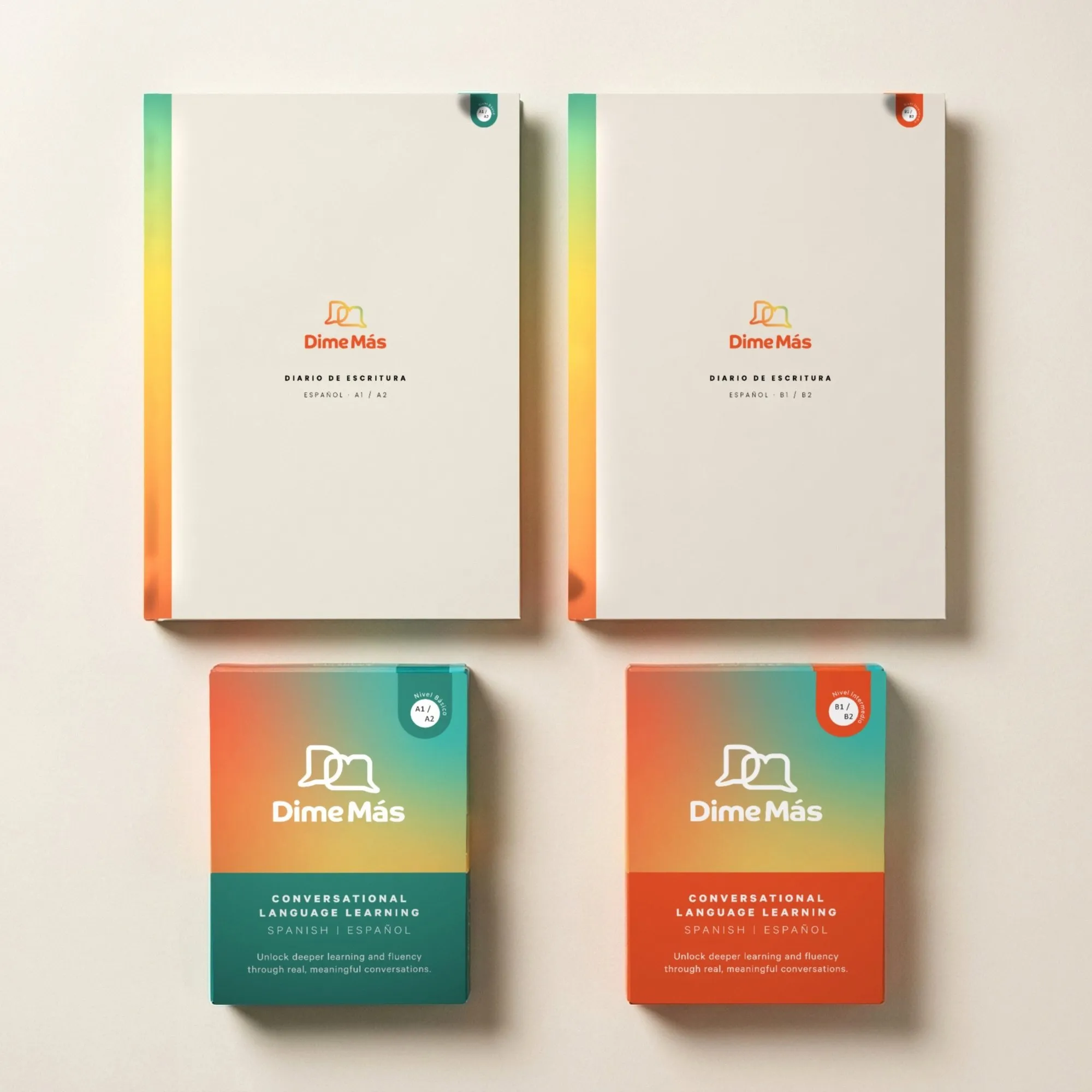
When the first answer is still a bit polite, ask them to tell you more. In Spanish that’s dime más, which is where the name of the cards comes from. Quite often the second thing someone says is the first thing they really meant.
If someone passes, let them. Thank them for being there and try a lighter question later, or on another night.
Keeping it simple
You don’t need a list of thirty questions. One good one will do, or three if there’s time. I’d start with something about home or belonging, like where you feel most like yourself. Then something about a person, like who taught you a habit you’ve still got. If the table’s comfortable, finish with something a bit braver that people can still pass on, like something you’ve been carrying around and haven’t said yet.
Two to four people is plenty. A whole party passing cards round can start to feel like a game show, so read the room. One end of the table and one question is often better than something loud.
If there are kids at the table, pick questions that bring them in without putting anyone on the spot, or save it for later when they’ve gone to bed and the evening has slowed down.
Putting the question on a card
There’s something about having the question on a card rather than a phone. Someone has to pick it up and read it out, and by the time they have, everyone’s looking at each other instead of at a screen. I’m not going to pretend it’ll make anyone fluent by Friday, and the card won’t do the listening for you. It just saves you from starting with the weather when you meant to start with a person.
After the plates are cleared
The conversation doesn’t have to stop when someone starts the washing up. Sometimes the real answer turns up while someone’s drying a glass, or later over a cup of tea once the busy part of the evening’s done.
If a question opened something up, come back to it in a few days without the card. “You said you’d miss the noise of that street. What was it like?” That’s how one dinner turns into a habit of actually knowing each other.
If nothing opened up, that’s fine too. Don’t pick it apart afterwards. Try a different question another night, maybe on a walk instead of round a table.
What a good question can’t do
A better question won’t fix loneliness or make anyone close on demand, and it’s no replacement for friendship. All it does is change the conditions a little. If someone doesn’t want to go deeper, that’s their call.
Not every practical, chatty evening is a failure either. Some nights everyone’s tired. Sorting out who’s picking up whom and what needs buying is a way of looking after each other too. It only becomes a problem when it’s the only kind of talking you ever do.
So this week, try one question at dinner and give the answer more time than feels natural. If you want somewhere to find one, there are plenty in the question archive, in English with your language beside it.
Every article is built on published research and checked against the original study. Edited by Cameron Graham.
Related


A question
What's one question you'd like to bring to dinner this week?
Get the next one by email →