

A night in without screens: a conversation game for two
By ProFluency Journal. Published 15 October 2026.
A date night doesn’t need a booking. It needs the laptop shut and a better question than “how was your day?”
You probably know what a flat evening looks like. A takeaway, something on in the background, both phones face down on the sofa and still buzzing away. Nobody plans to spend two hours half paying attention to each other. It just happens when nobody decides otherwise.
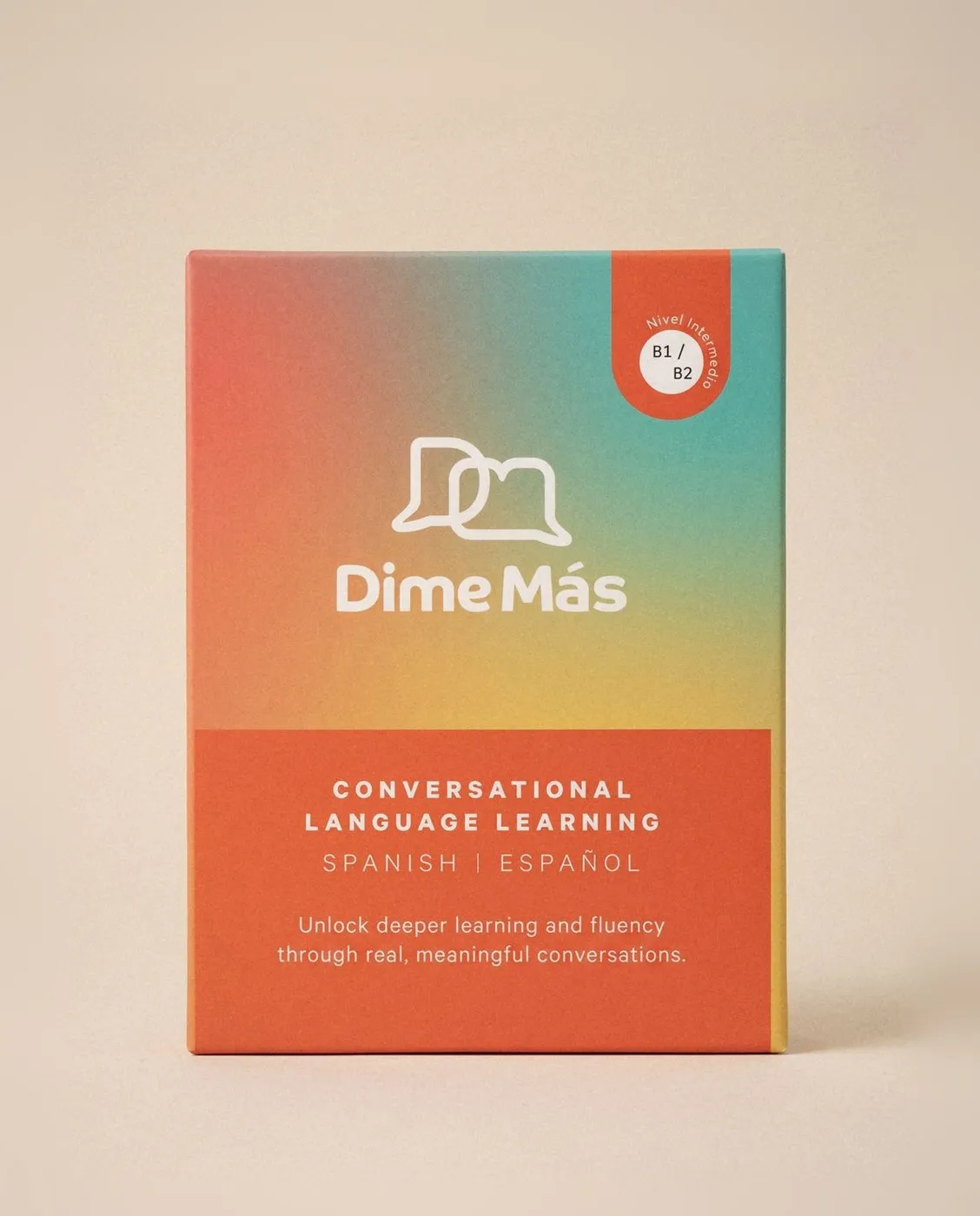
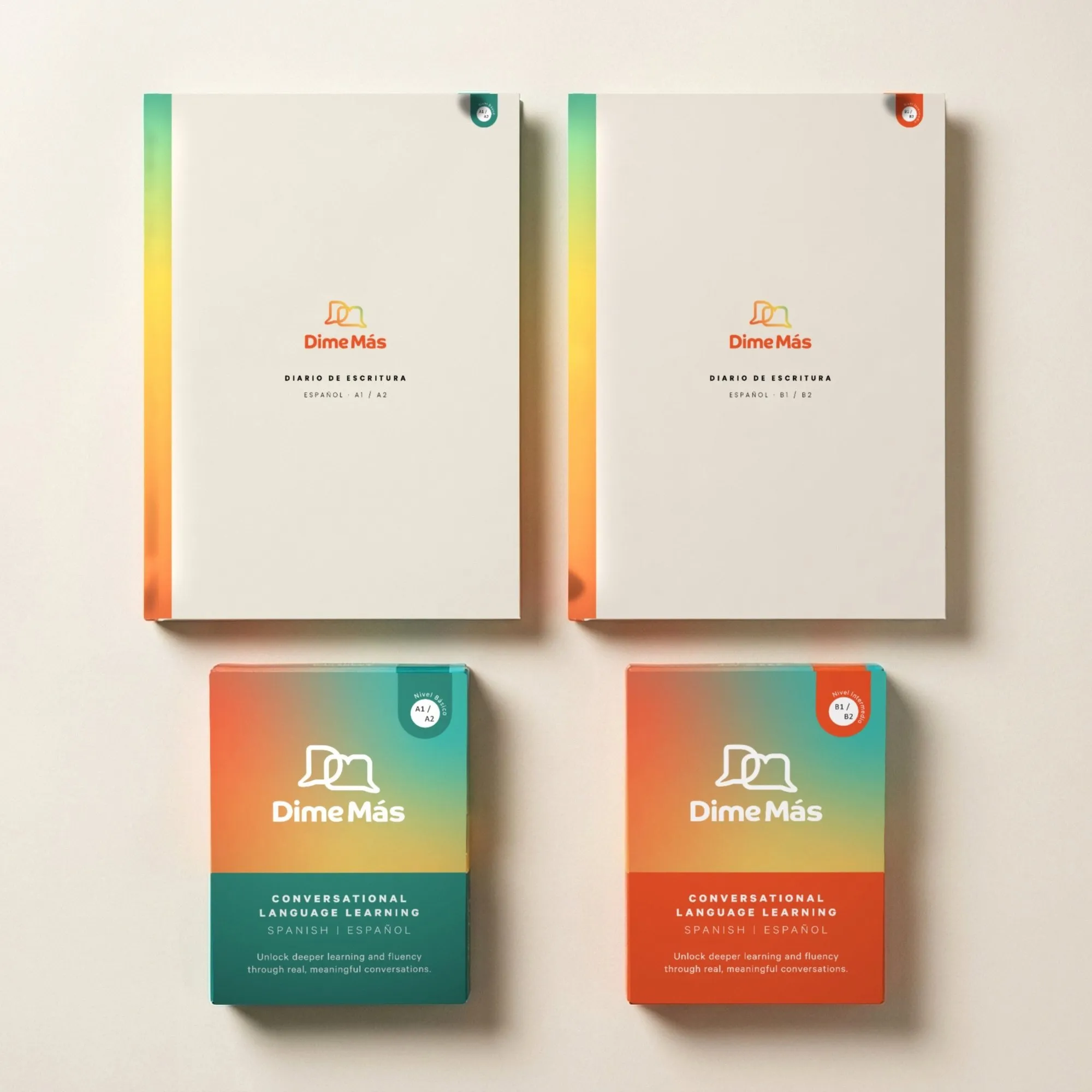
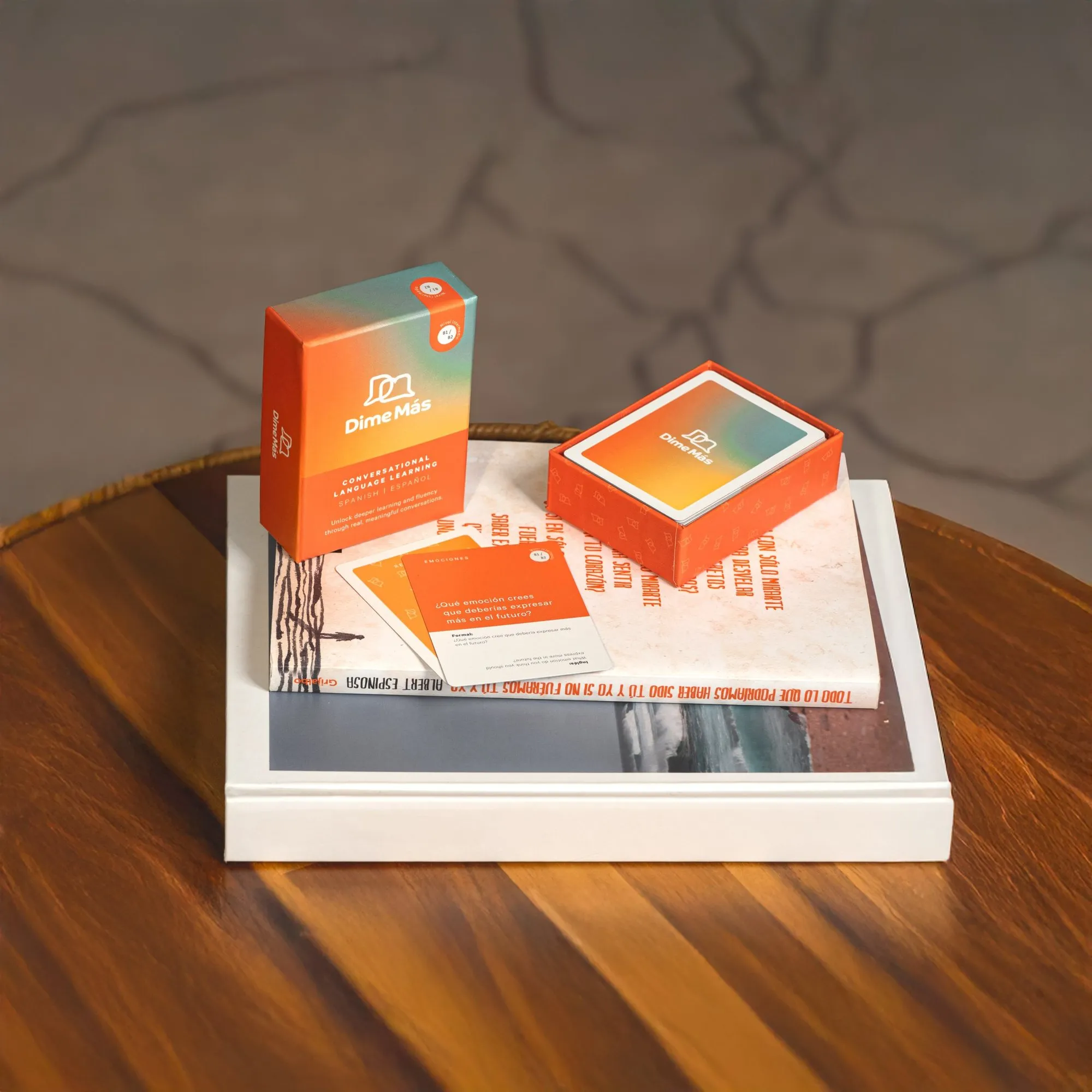
The cards I make are in Spanish with English on every card, because Spanish is the language I learned while living in Spain, and I’m still learning it now. You don’t need to be learning anything to have this kind of evening, though. You might both be working on the same language. One of you might be from Spain and practising your English. Or you might just want a better conversation in English. It all works the same way.
Dime Más works for two as well as it does for four. You draw a card, ask it and listen. If you’re practising, read the Spanish first, and if you just want the question, read the English. It’s not a course, just something better than the weather to put between you.
Get the room ready
Put the phones in another room, or in a drawer. Face down on the table doesn’t count, because they still light up and one of you will look.
Get something to drink and enough light to read by, and turn the telly off. You don’t need candles or a playlist. Two chairs facing each other is about all it takes.
If the kitchen’s still a mess, leave it. Tidying up is a very easy way of putting off sitting down.
You don’t need many questions
Three is usually enough for an hour. Start with something ordinary that still needs the other person to answer it, like what they’d miss about this flat if you moved. In Spanish that’s ¿qué echarías de menos de este piso? Then something about the two of you, like who taught them a habit they’ve still got. If the mood’s right, finish with something a bit deeper and give them an easy way out, like what they’ve been carrying around this month and haven’t said out loud.
More cards than that and it starts to feel like a quiz, when what you actually want is for the other person to keep going once the first, polite sentence is out of the way.
If you’re using the Spanish, keep the English where you can both see it. Tonight isn’t the night to prove what level you’re at. Only cover the English up if neither of you needs it.
If one of you gives a short answer, ask them to tell you a bit more. In Spanish that’s dime más, tell me more, which is where the cards get their name. Ask it gently, like an invitation. The second sentence is often the one that actually says something.
If one of you is shy
Let them go second, or answer in English if they’d rather. Passing is always allowed. The evening falls apart if it turns into a contest over who’s keenest on learning.
Shyness is often just someone being careful. They might not want to sound less clever than they do in their own language, or they might not want to start a conversation they can’t finish before Monday. Go first yourself, with a middling answer rather than a big confession. People tend to match the amount of risk you show them.
If the second language is a stretch for one of you, say so once, lightly, and carry on. Estoy aprendiendo, I’m learning. Then ask the question. And save any corrections for another time, because being corrected over dinner is how people stop talking.
If you live together
You’ve already done the small talk a thousand times. So use the questions you’d never ask on a Wednesday while you’re loading the dishwasher.
Couples who live together can assume they’ve already said everything that matters, when what they’ve mostly said is who’s picking up the milk. The deeper stuff tends to wait for a slower evening and a better question. Sharing a home makes the everyday chat very efficient, and that’s a different thing from feeling close.
If you speak two languages between you, you can split the card. One of you reads the Spanish, the other reads the English, and you both answer. That way it isn’t a lesson for one person while the other one sits and watches. If one of you is much stronger, try not to finish the other’s sentences, even when you know exactly what they’re trying to say.
If you’ve got children asleep down the hall, keep your voices down and the questions gentle. You’re not after an all night confession, just one real conversation that’s still with you both at breakfast.
Why I like a card on the table
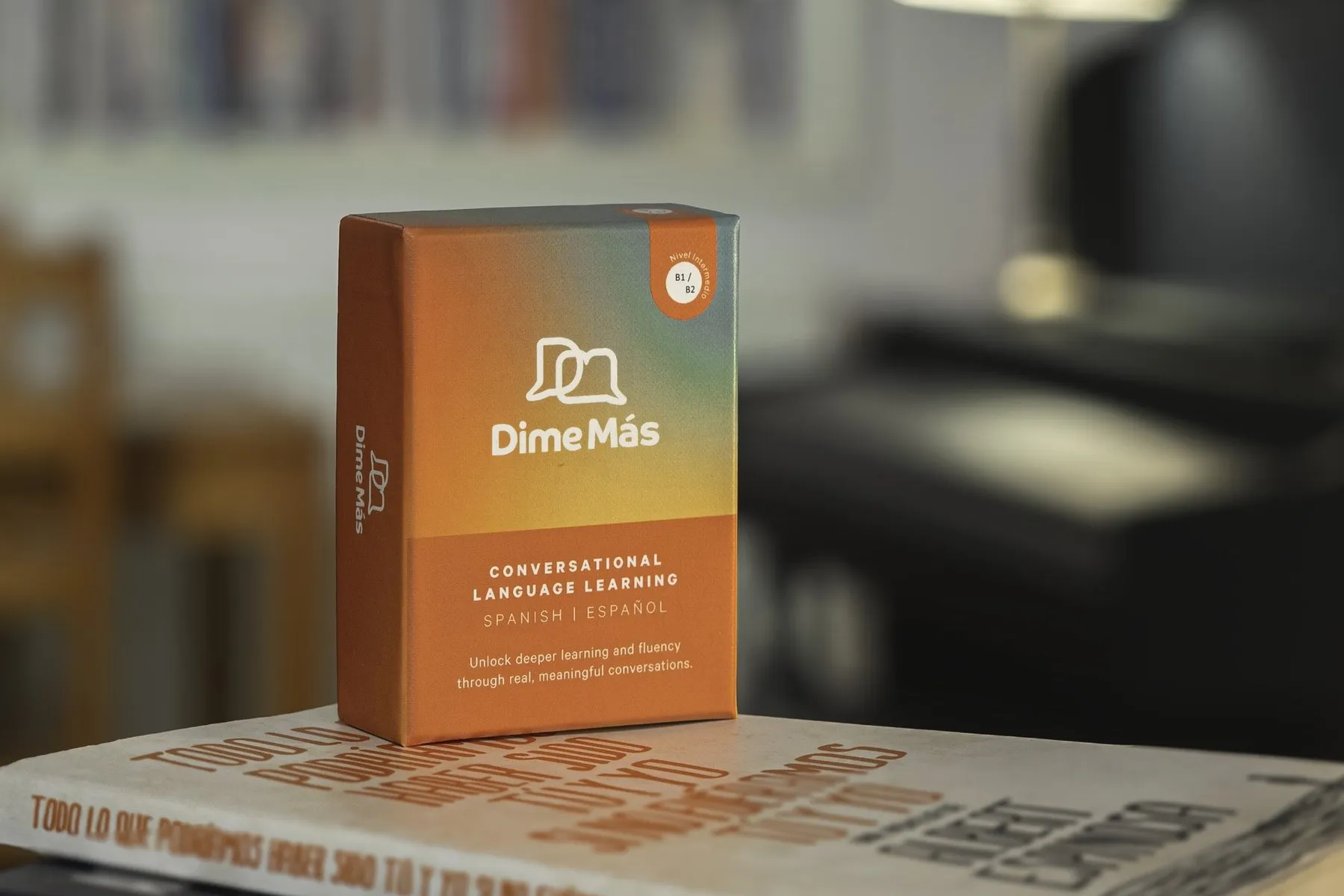
I’m biased, obviously, but I think a physical card does something a phone can’t. A phone is always offering you the next thing, another video or another list of date night ideas you’ll never look at again. A card just sits there until one of you picks it up, and while you’re reading it out you’re looking across the table rather than down at your hand.
The pause before someone answers is part of the conversation too. That’s them working out what they actually want to say. If you jump in with a joke or another question too early, you take that away from them. If you wait, you usually get something better.
When it stalls
Sometimes a question lands and nothing happens. They shrug, you both laugh a bit awkwardly. That’s fine, it usually just means the question was too big for right now.
Go smaller. Ask about something already in front of you, the food or a friend you both know, and come back to the bigger one later. Or swap who’s asking. Or answer it yourself first with something true and ordinary, so they can see how far you’re happy to go.
If it’s the language that stalled things, switch to English for a whole answer and then go back. You’ll get more out of an evening where nobody feels embarrassed than one where you stuck to Spanish and ended up sitting in silence.
Afterwards
Don’t go over the evening like a meeting. Leave something unfinished, so it carries on into the week.
You might have heard a name you didn’t know, or a place they’d miss, or something they used to do as a kid. Bring it up again on Thursday without the card. That’s when you know the evening was worth it.
And if the night felt a bit flat, that’s alright too. Maybe the questions were too big for how tired you both were. Try smaller ones and a shorter evening next time. You can’t force feeling close to someone, but you can make a bit of room for it.
If you want to try it before you buy anything, there are free questions in the question archive, in English with your language beside it. Pick three, put the kettle on and see where you end up.
Every article is built on published research and checked against the original study. Edited by Cameron Graham.
Related

A question
What would you ask each other if the phones were in another room?
Get the next one by email →