


How to run a language exchange that doesn't fizzle out
By ProFluency Journal. Published 15 October 2026.
A language exchange usually starts with lots of good will and ends up on the weather. You’re both polite, neither of you wants to play teacher, and the hour slowly runs out of steam.
In Spanish it’s called an intercambio. I’ll use Spanish for the examples because it’s my second language, picked up living in Spain, and one I’m still working on. But an exchange has two sides by definition. For every English speaker practising their Spanish there’s a Spanish speaker across the table practising their English, and the same goes for any pair of languages. Everything here is meant for both of you.
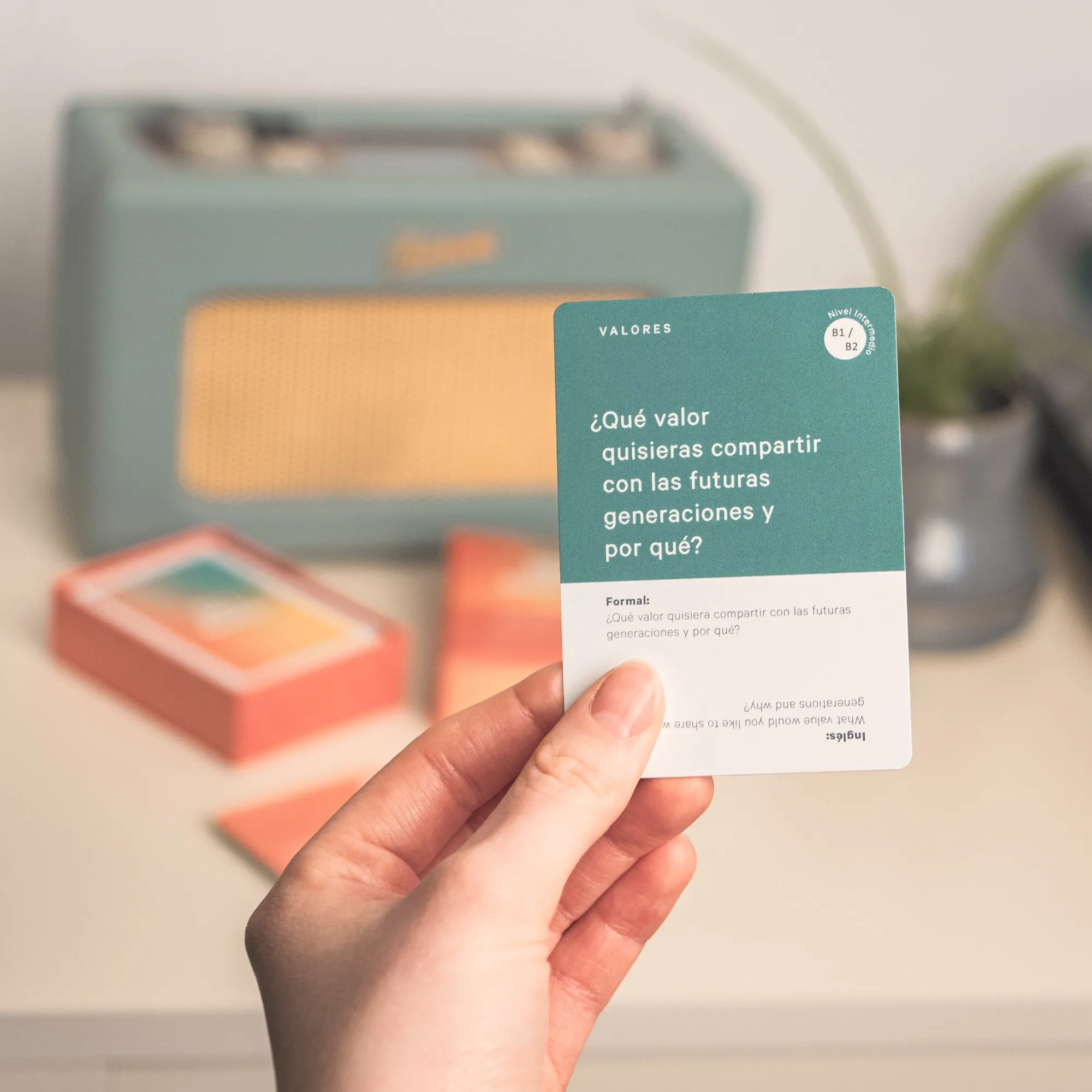
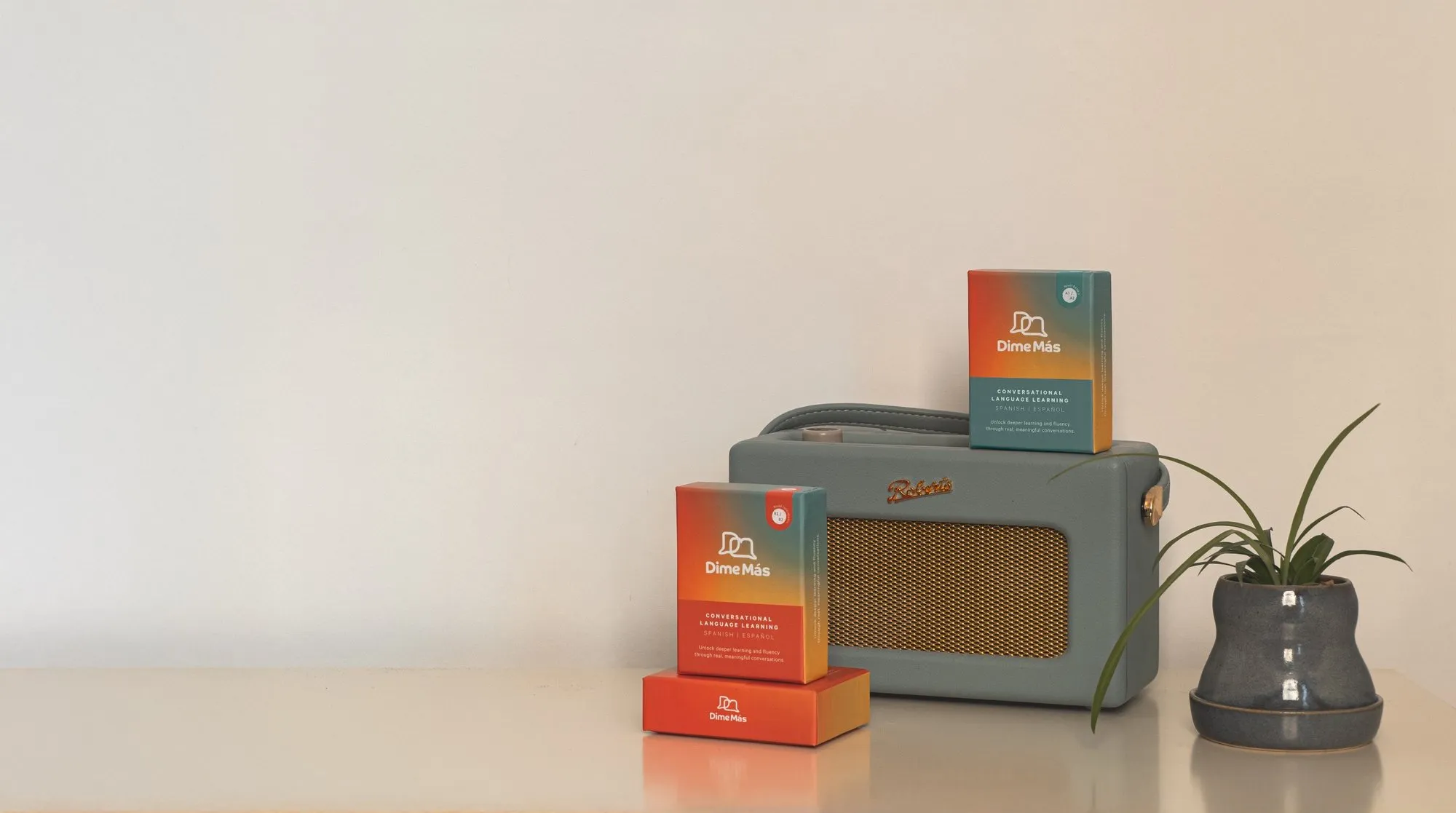
What helps more than anything is something to look at in the middle of the table. A question you can both read, in both languages. Without it, whichever language is stronger takes over, and you both go home feeling a bit flat.
Split the time on purpose
Agree a split before you start, say 25 minutes in Spanish and 25 in English, and put a timer somewhere you can both see it. When it goes off, switch, even if someone’s halfway through a sentence. It feels strict, but without it one language quietly takes over the whole hour.
If one of you is much stronger in both languages, look after the weaker one on purpose. It’s very easy to say “I’ll just finish this thought” in the comfortable language and never go back. The timer is there to be fair to you both.
Online it’s the same. Cameras on if you can, phones somewhere else, and the question on a shared screen or held up to the camera so you can both read it.
Have the questions where you can both see them
Having the question in both languages matters, even when one of you is a native speaker. It keeps things fair. You can see what they’re asking you, and they can see what you’re trying to ask them.
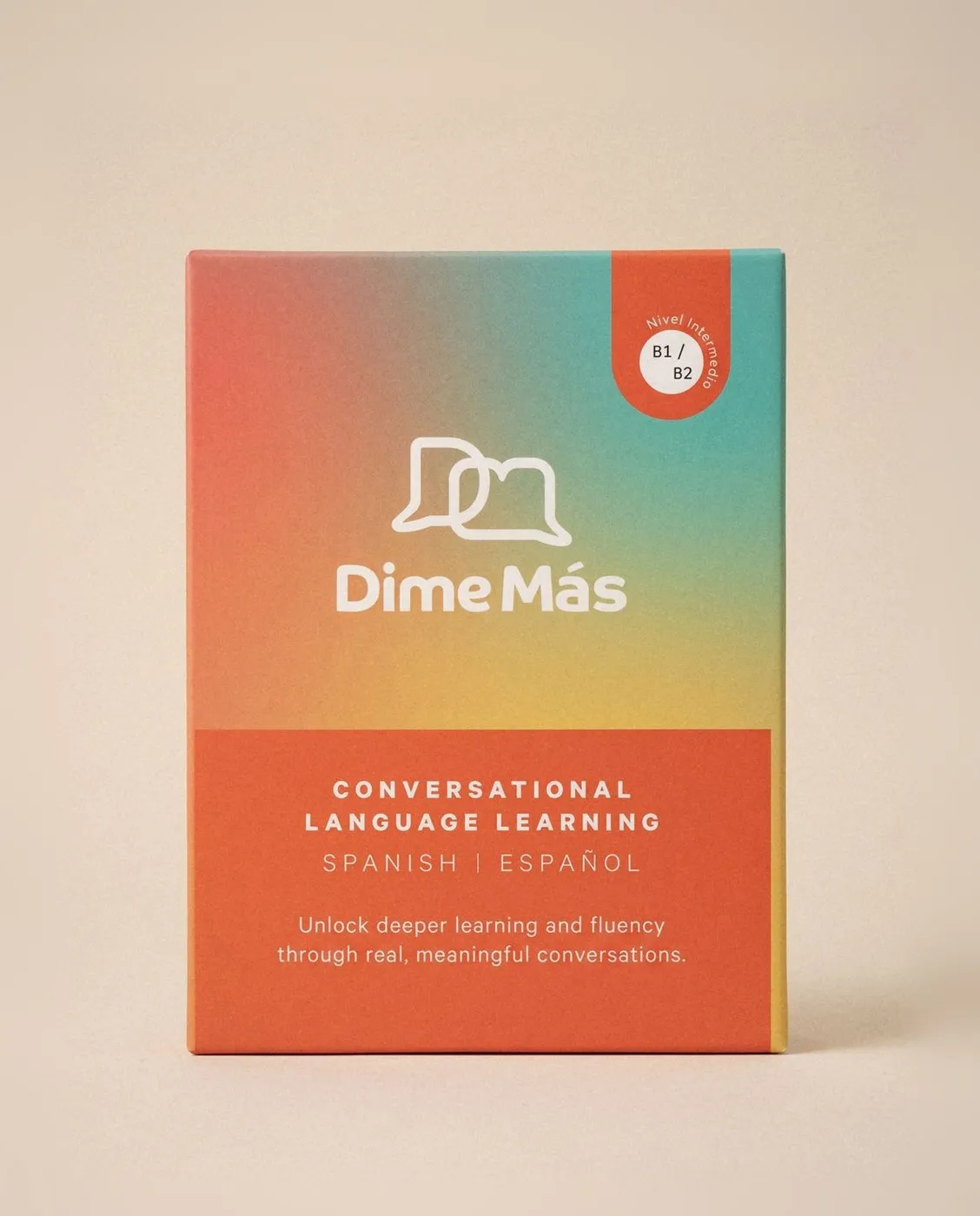
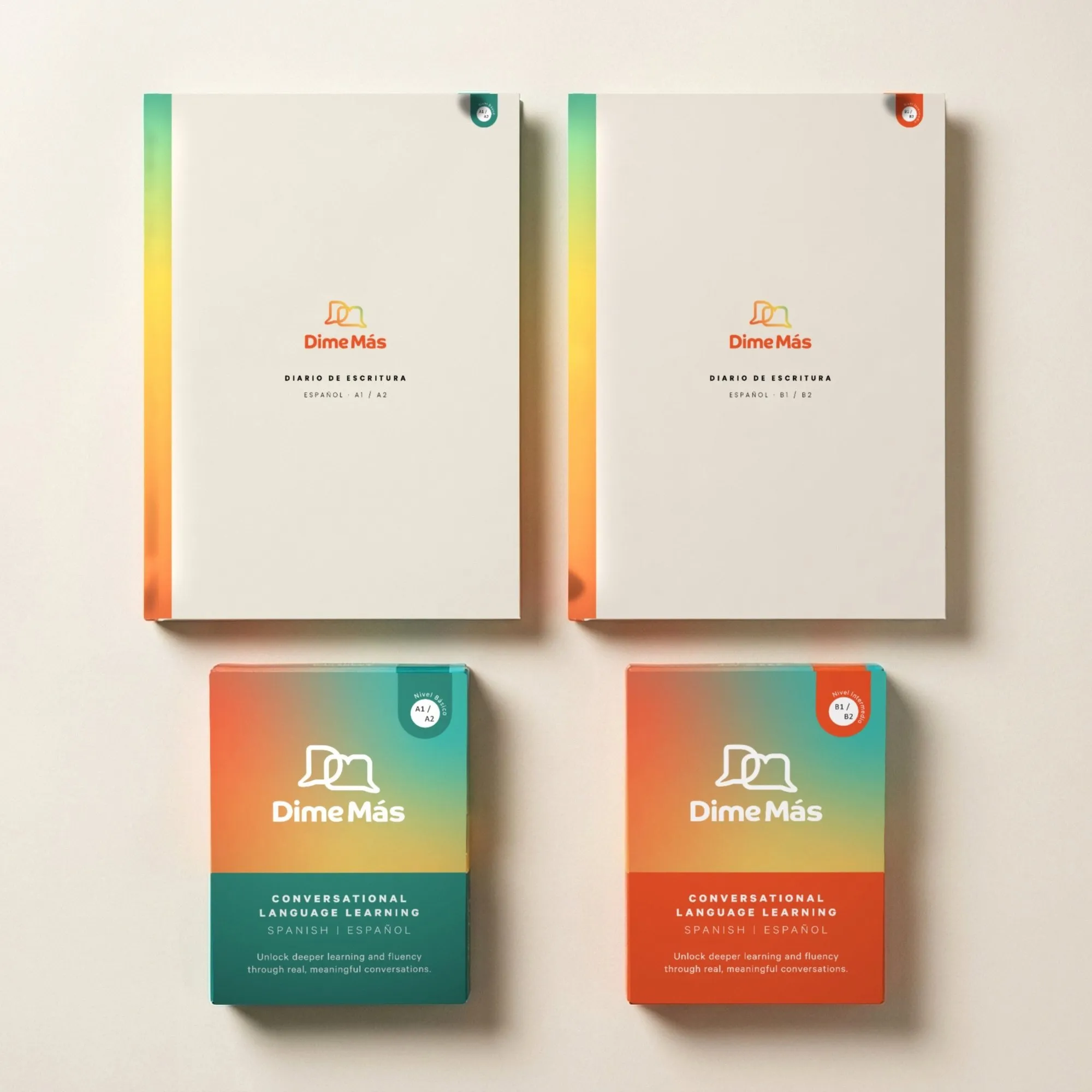
Dime Más cards are made for two to four people, so an exchange of two is the smallest table they fit. If you’d rather use a printed list, keep it short. Three to five questions is plenty for a first hour. Any longer and it starts to feel like a syllabus.
Pick questions that need a person to answer them, about home, work, a habit or a memory. “What’s your favourite colour?” gets you a colour and not much else.
A few ground rules
Agree on corrections at the start. Some people want every mistake pointed out. Most would rather not be stopped in the middle of an answer and are happy with one or two things mentioned at the end. If you’re not sure, go with less. Being corrected all the time is one of the main reasons people stop turning up.
Nobody gives long grammar lectures unless they’re asked, and nobody’s keeping score. You can make notes, and you can look up one word on your phone, but then it goes away again.
If you’re meeting in a café, buy something and sit where you can hear each other. And finish when the hour’s up, even if it’s going well. Ending on a good note makes it much easier to book the next one.
When it starts to fizzle
Usually one person’s doing all the talking, or you’ve both drifted back into the easier language. Sometimes the questions are just too small to go anywhere, and a bigger one about home or work, or someone who matters to them, can turn it round.
If it still isn’t working, the match might just be wrong, and that’s alright. You’re allowed to say so and find someone else. A short message is enough, something like “I don’t think our times are quite working out, but thanks so much for the sessions.” You don’t owe a friendship to everyone you practise with.
Sometimes it’s about energy. Someone who loves a good debate and someone who’d rather swap stories can both be lovely and still not be a great pair. Pay attention to how you feel on the way home.
Your first session
Meet, agree the split, draw three cards and get a drink. Before you leave, while it still feels good, book the next one.
If either of you is nervous, keep the first one short. Forty minutes with a clear finish is better than an hour and a half that slowly runs dry. Leave a question unanswered for next time, so there’s something to pick up.
Between sessions you could write one answer down and say it out loud once. It only feels like homework if you let it, and it means the next session starts somewhere better than the weather.
Bring a pen and one question of your own in case the cards don’t suit the mood. If the other person turns up shattered, aim lower. Two questions, a lot of listening and an early finish is still a good session.
Finding someone and keeping it going
Where you find someone matters less than how you run the hour. Apps, university noticeboards, language cafés and friends of friends can all work. What keeps it going is reliability. Reply when you say you will, arrive on time, and if you have to cancel, cancel early. People letting each other down kills far more exchanges than bad grammar ever does.
After three sessions or so, check in. Is the split still working? Are the questions the right size? Do you both want to carry on? Five minutes of being straight with each other saves months of polite chat that isn’t going anywhere. If your levels have drifted apart, change the questions or part on good terms. A bit of stretch is good for you, but if one of you is dreading it every week, something needs to change.
Groups of three or four can work too, as long as you still split the time between languages and keep one question where everyone can see it. Much bigger than that and people start to hide.
If you only change two things
Use a timer, and put one question on the table that you can both read. Those two things alone will keep most exchanges going well past the first few weeks.
If you need questions for your first session, the free question archive has English first and your language beside it, so it works whichever side of the exchange you’re on.
Every article is built on published research and checked against the original study. Edited by Cameron Graham.
Related
A question
What would make you want to book the next one?
Get the next one by email →