


Talking with your partner's family in another language: questions that help
By ProFluency Journal. Published 15 October 2026.
Plenty of couples speak one language at home and another when the wider family gets together. You can love someone and still miss the joke their uncle tells. You can really want to belong and still answer everything with a smile that comes a bit too quickly.
I should say where I’m coming from. Spanish is the second language I learned, from living in Spain, and I’m still learning it, so that’s where my examples come from. This works the same whichever way round you are, though. You might be English and meeting a Spanish speaking family for the first time. You might be from Spain, sitting down to Sunday lunch with your partner’s family over here and trying to keep up with the English. Or it might be another language altogether. The feeling at the table is much the same.
I know that table well enough. I’ve sat with people I liked a lot and still not quite reached them, missed the joke everyone else was laughing at, and said something safer than what I meant. None of what follows will make you fluent before Christmas. It’s a way of asking something real, with your own language there as a backup, so the family can tell you came to meet them.
What usually goes wrong
Most of us go one of two ways. We either go quiet, which can come across as distance, or we try too hard and it starts to feel like a school play. Neither feels much like you.
What works better is somewhere in the middle. One real question, asked slowly, and being alright with only catching half the answer. Your partner can help, but they shouldn’t end up as your interpreter for the whole meal unless they want to be.
The other thing that catches people out is the visit turning into a progress report. Someone mentions how well you’re doing with the language and suddenly the whole table is looking at you, waiting. It’s meant kindly, but it still puts you on the spot. If you’d rather avoid that, ask your partner beforehand to steer people away from it. Having a go when nobody’s making a fuss is so much easier than being tested in front of everyone.
Talk to your partner before you get there
Agree a couple of things in the language you share at home. Who’s going to help if you freeze, and whether you want every joke translated or just the ones that matter. If you’d rather sit next to a patient aunt than at the loud end of the table, say so now.
It’s also worth agreeing what a good visit looks like. One real conversation with one person is plenty. You don’t need to win over the whole extended family in an afternoon, and keeping the goal small keeps the nerves small too.
Remember your partner is going back and forth between two worlds as well. If they grew up with the family’s language, they might be tired of translating by the time pudding comes round. Thank them for it, and try not to turn their family into your classroom.
Questions that don’t feel like an interview
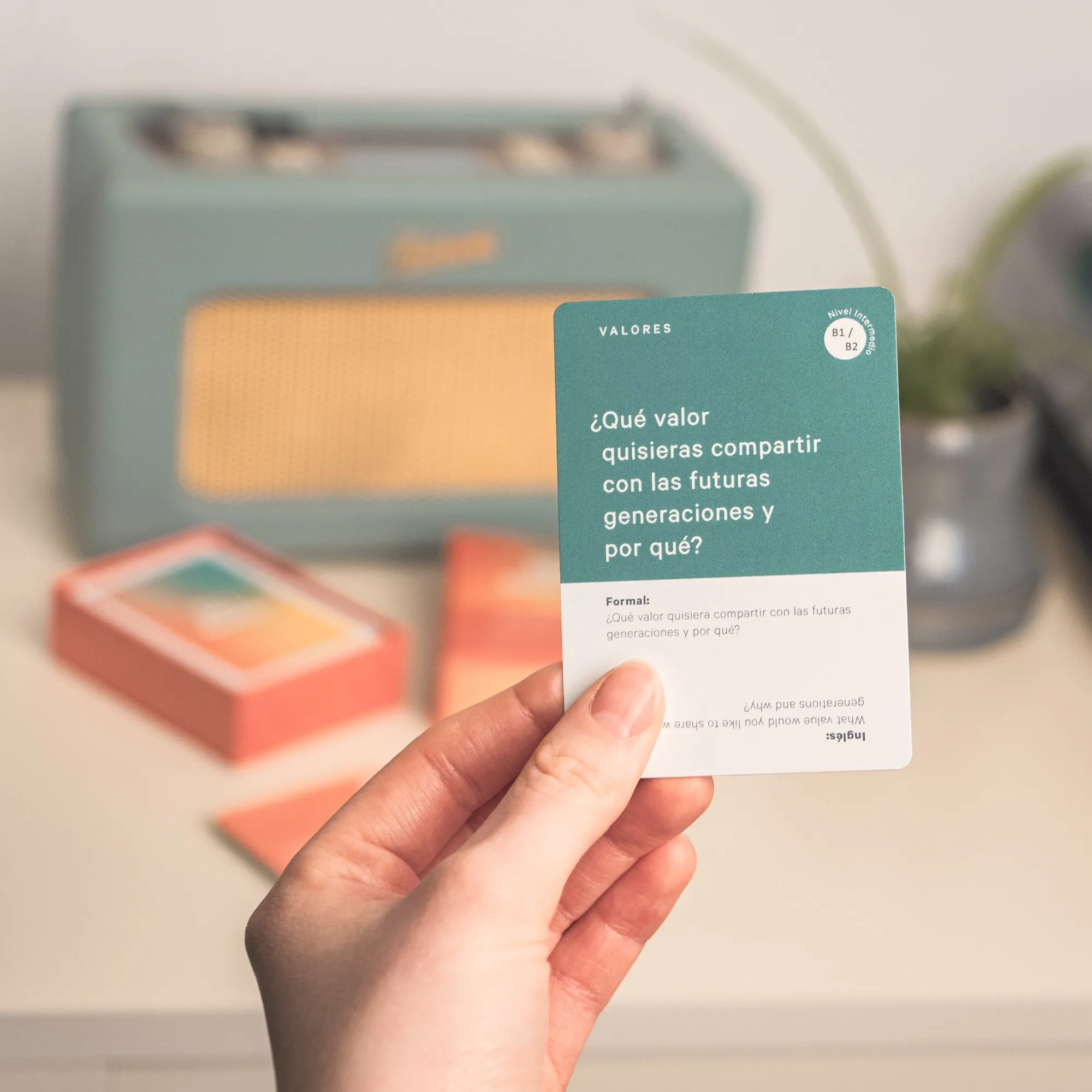
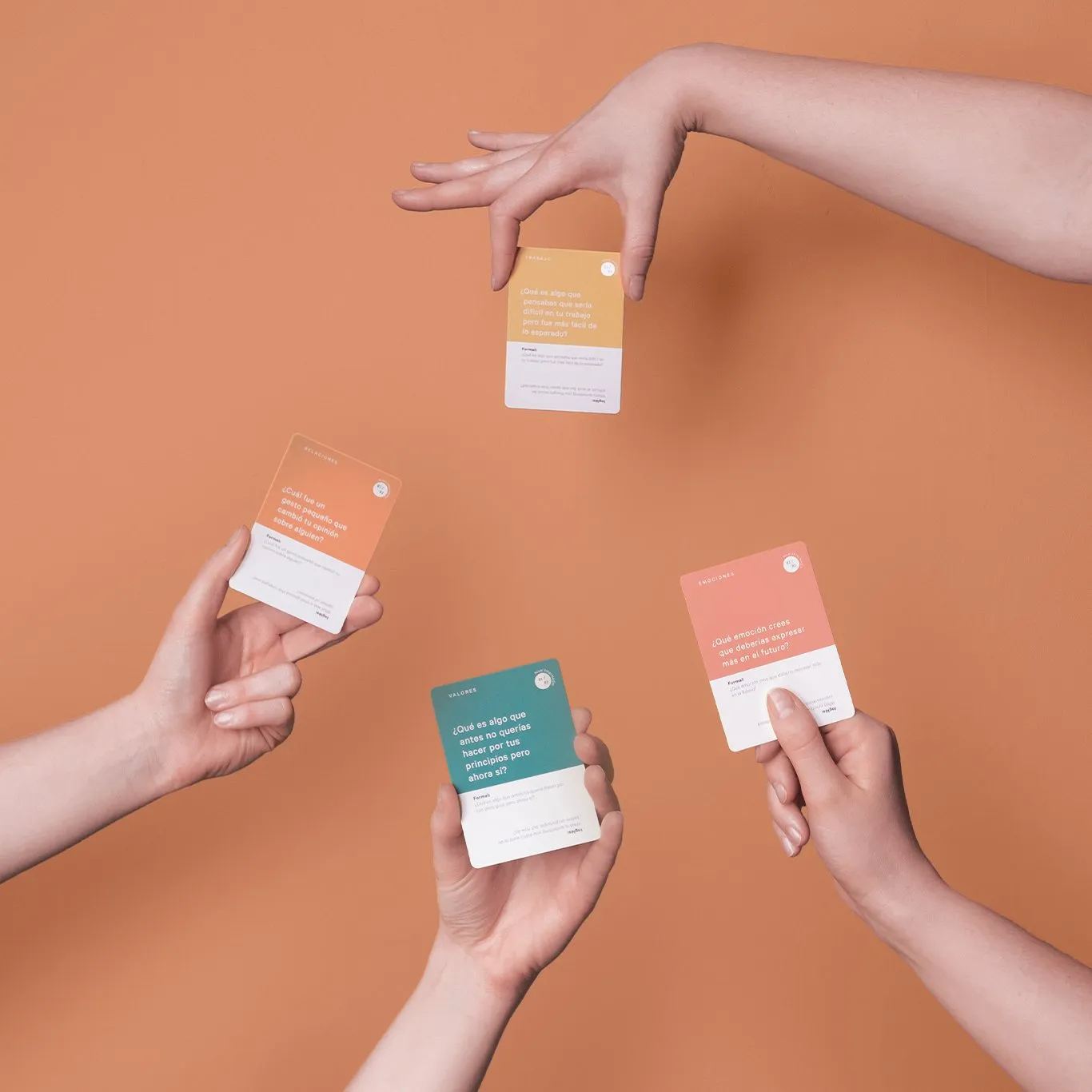
The questions that work best are about a place, a person or a habit. Here are a few in Spanish, with the English, because that’s what I know.
¿Qué echarías de menos si te mudaras? What would you miss most if you moved away?
¿Cómo eran las comidas en tu casa cuando eras joven? What were meals like at home when you were young?
¿Quién te enseñó a hacer esto? Who taught you to make this?
¿Cómo os conocisteis? How did you two meet?
That last one is for the parents, and it rarely fails. In Spain most families will be happy with tú, but if you’re unsure with the grandparents, your partner will know.
Questions like these let someone tell you a story, and a story is much easier to follow than an opinion. If you’ve only caught every other word, you can usually still tell where it’s going. An opinion about the news is a lot harder to keep up with, and it’s more likely to start an argument. If the family is English and you’re the one learning, the same questions work just as well in English.
If it’s a big table, ask one person rather than the whole room. Use their name and look at them. A question thrown out to twelve people usually just gets a polite smile and goes nowhere.
If you’re just starting out
Say so, simply. In Spanish that might be estoy aprendiendo, ¿puedo preguntarte algo en español?, I’m learning, can I ask you something in Spanish? Then ask it. If they answer too fast, you’re allowed to say más despacio, por favor, slower please. Most families would much rather you had a go than sat there like a guest passing through.
Keep the question written down in your own language too if it helps. Nobody at a kind table will mind, and if someone does, that tells you something about them, not about you.
It’s worth having two or three questions ready and one short thing about yourself. Where you grew up, what you do with your days, what you love about the person who brought you. Giving something of yourself stops the visit being all about them.
If you’re somewhere in the middle
At intermediate level you usually understand more than you can say, and that gap really shows at a family table. You follow the story right up until the punchline and then lose it. So ask for the punchline. ¿Qué ha dicho?, what did he say? Most people are happy to tell a good joke twice.
Say something of your own as well, even if it’s short. A small memory, something you like, or a thank you that mentions something specific, like gracias por la comida, me he sentido como en casa, thanks for lunch, you’ve made me feel at home. A short sentence like that often goes down better than a long, careful speech that never quite lands.
When you’ve caught most of a story, show it. Nod in the right place, remember a name, ask one more question about it. Following along is a way of showing respect long before your own sentences sound the way you want them to.
A few things to avoid
Try not to turn the visit into a lesson, and don’t correct anyone in the family. I’d steer clear of money and politics unless you already know the room well. And please don’t film it.
Don’t promise you’ll be fluent next time either. Just come back with another question.
If the talk gets fast and you need a breather, take one, but do it in a way people can see. Offer to wash up, step outside for a minute, or ask your partner for five minutes. Disappearing into your phone, or wandering off in the middle of someone’s sentence, can look like you’ve switched off from them when really you were just overwhelmed.
When the table gets loud
Family meals are hardly ever one person speaking at a time. People talk over each other, the subject changes, a child needs something from the kitchen. The question you practised in the car might never get its moment.
That’s fine. Some of the best conversations happen away from the table anyway, drying plates with someone’s mum or walking to the shop. A few minutes with one person in the kitchen can mean more than anything you manage to say over lunch.
If you only catch half a story, show the half you caught. And if all you can manage is no lo entiendo todo, pero me gusta escucharos, I don’t understand all of it but I like listening to you all, that’s still worth saying. It keeps you in the room.
On the way home
Ask your partner what went well and what felt a bit off. Not so they can mark you, but so the next visit is easier. Maybe one uncle loves slow questions, or there’s a subject everyone avoids. Maybe someone was trying to include you and you missed it.
Write down the question that worked and bring a different one next time. Turning up visit after visit with something to ask does more for belonging than one amazing first impression.
And thank your partner. They spent the day going between two languages for you, which is a lot of work, even if most of it looked like passing on what people said.
If you’d like a few more questions in your pocket, there are plenty in the question archive, with English first and your language beside it. Pick one and save it for the washing up.
Every article is built on published research and checked against the original study. Edited by Cameron Graham.
Related
A question
What would you like your partner's family to know about you, whatever language you say it in?
Get the next one by email →