


Spanish sayings (refranes) and the conversations they start
By ProFluency Journal. Published 15 October 2026.
Ask someone what a saying means and you’ll rarely get just a translation. You’ll get a grandmother who said it every time someone was late for dinner, or a boss who used it to talk people into staying late, or a story about who said it to them and why. That’s what I like about refranes. They’re sayings people still use every day, and the explanation is usually more interesting than the words.
Spanish is my second language. I picked it up living in Spain and I’m still learning, so Spanish sayings are the ones I can write about with any confidence. Every language has its own stock of them though. If you’re a Spanish speaker getting to grips with English, I’ve put a few English ones further down that work the same way in reverse.
One thing worth saying first. These are all well known, but meanings shift from place to place and between generations. A refrán might land slightly differently in Madrid than in Mexico City or Buenos Aires, and someone’s grandmother might use it differently again. So take what I’ve written as a starting point and ask the person you’re talking to which version they grew up with.
Más vale tarde que nunca
Better late than never. You’ll hear it said kindly, when someone finally turns up or finally gets round to something, and you’ll also hear it said with a bit of an edge. Which one you get depends on the tone and on who’s saying it, and that makes it a good one to ask about. When did someone last say it to you, and did they mean it nicely?
No hay mal que por bien no venga
Literally, there’s no bad thing that doesn’t come with some good in it. It’s close to every cloud has a silver lining. Some people find it comforting. Others find it a bit much when they’re going through something hard and someone tells them it’ll all work out for the best. People often have strong feelings about this one either way, and that disagreement makes for a far better conversation than the translation does.
Quien no arriesga, no gana
Whoever doesn’t take a risk doesn’t win, or as we’d say in English, nothing ventured, nothing gained. It’s an easy one to understand, so the interesting part is what it means to the person in front of you. Ask about the last risk they took that had nothing to do with money. It might be a move abroad, or something as small as speaking up in a language they’re still learning. Let them decide what counts.
Dime con quién andas y te diré quién eres
Tell me who you spend your time with and I’ll tell you who you are. The nearest English is probably birds of a feather flock together, or you’re known by the company you keep. It can sound like a warning from a parent, and it can also be about belonging. Ask who they hung around with growing up, and who they spend their time with now. Go gently, because this one can drift into judging people, and if the mood’s not right it’s fine to pick a lighter saying.
Eres mi media naranja
You’re my other half, or literally, you’re my half orange. Couples hear this one a lot. Some people love it and some find it a bit soppy. What I’d ask is what they actually call the person they love, because pet names say a lot about how people show affection where they grew up, and they’re often funnier than you’d expect.
En casa de herrero, cuchillo de palo
In the blacksmith’s house, a wooden knife. It means the people who are good at something often don’t get round to doing it for themselves, a bit like the English saying about the cobbler’s children having no shoes. I like this one because almost everyone has an example, whether it’s the hairdresser who never has time for their own hair or the builder whose kitchen has been half finished for years. Ask them what theirs is.
How I’d use them
The main thing is not to turn it into a quiz. Read the saying out, ask when they’d use it, and then stay with whatever they tell you. If they’ve got a better saying than yours, go with theirs.
A simple way to do it with a friend or a partner is to read one refrán out loud and ask when they last heard it, or said it themselves. Then ask whether they actually believe it. You’ll often find the first answer is the polite one, and the better story comes out when you ask them to say a bit more.
Two sayings is plenty for an evening. Once you start working through a long list it turns into trivia night, and nobody has time to tell you about their grandmother.
Bring one from your own language
This part matters more than it looks. If the conversation only ever goes one way, with you collecting Spanish wisdom, the other person ends up feeling like a tour guide. So bring something from home, ideally a saying your family actually uses, or one you only half believe.
Say it, translate it roughly, and ask what it reminds them of. Quite often they’ll come back with a similar saying of their own, or tell you it makes no sense at all, and that’s when it turns into a real back and forth. If you grew up with more than one language you’ll already know how sayings travel between them and change shape on the way, which makes this even more fun.
If you’re learning English
All of this works just as well the other way round. If Spanish is your first language and you’re learning English, English sayings are a great way into a conversation, partly because so many of them sound ridiculous when you stop and think about them.
It’s raining cats and dogs, where Spanish would say llueve a cántaros, it’s raining by the jugful. Don’t count your chickens before they hatch, which is close to no vendas la piel del oso antes de cazarlo, don’t sell the bear’s skin before you’ve caught the bear. The early bird catches the worm, which Spanish puts as a quien madruga, Dios le ayuda, God helps whoever gets up early.
Ask an English speaker where one of these comes from and there’s a good chance they won’t have a clue, which is a nice leveller. Then tell them the Spanish version and watch them try to picture the bear.
What a saying can’t tell you
A refrán isn’t proof that a whole country thinks a certain way. The same saying can be loved in one house and laughed at in the next, and people use them differently depending on their mood that day. If someone corrects your version, thank them, because that kind of local knowledge is worth having. If they’re not interested in sayings at all, follow them onto whatever they’d rather talk about.
The questions that get closest to the culture are usually the simple ones. Where did you learn it? Which saying do you wish people from abroad would stop quoting at you, as if it explained everything? The answers to those will tell you more than any list, this one included.
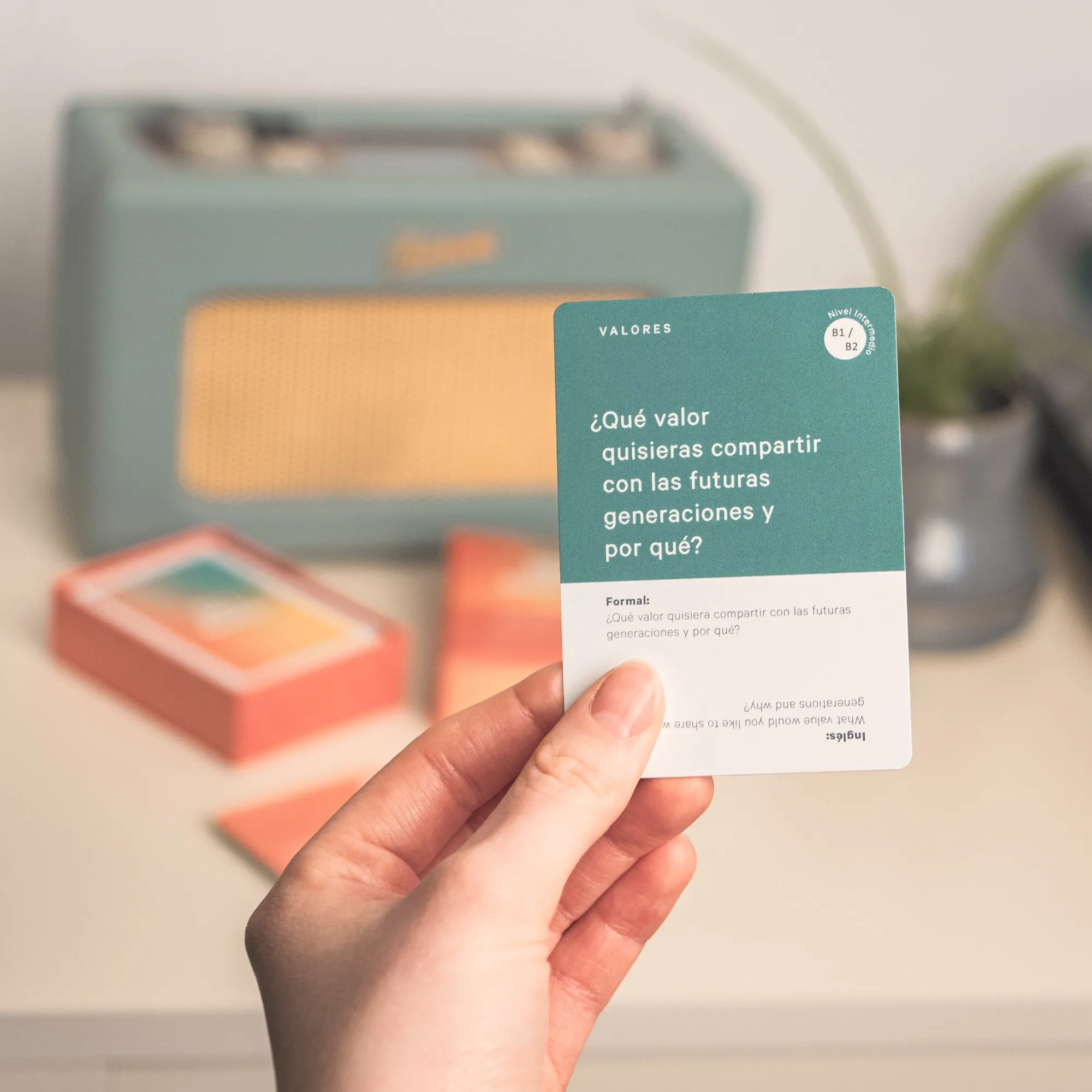
If you want more ways into a conversation, there are free questions in the question archive, in English with your own language beside them. Otherwise, try one saying this week, ask someone what it means to them, and write down the story they tell you, not just the words.
Every article is built on published research and checked against the original study. Edited by Cameron Graham.
Related

A question
Which saying from your own language would you have to explain?
Get the next one by email →