


Journaling in Spanish: 30 prompts for intermediate learners
By ProFluency Journal. Published 15 October 2026.
Writing in a new language is useful, but only if it doesn’t stay on the page. The bit that turns a notebook into speaking practice is reading what you wrote out loud afterwards, even if it’s just the last few lines and even if nobody’s listening.
I’ve written these prompts in Spanish because that’s the language I learned, by living in Spain, and it’s the one I’m still working on. They’re not really about Spanish though. If you’re learning something else, translate the prompt into that language first, which is a nice little warm up on its own. And if you’re a Spanish speaker working on your English, use the English beside each one and write your answers in English.
They’re aimed at intermediate learners, roughly B1 to B2, but plenty of them work earlier if you keep your answers short.
How to use them
Pick one and write for ten minutes in the language you’re learning. When you hit a word you don’t know, leave a gap and keep going rather than stopping for the dictionary every line. Fill in one or two of the gaps at the end. Then read your last three sentences out loud.
Don’t worry about dates or streaks. If you miss a day, or a week, just pick it up again. A notebook you feel guilty about is worse than one you come back to now and then.
If you live with someone, ask them to listen to those last three lines once a week. They don’t need to correct anything unless you ask them to. They just need to sit through the pauses with you. If you live on your own, say them to the kitchen. What matters is hearing your own voice say the words.
Why writing helps you speak
A lot of intermediate learners understand far more than they can say. Your ear is ahead of your mouth. Writing slows things down just enough for the words to catch up, and nobody’s watching you while you look for them.
Feelings often turn up on the page before they turn up out loud, too. You can work out something difficult in private and then say one sentence of it out loud to someone later. That’s a useful bridge if you freeze at a family dinner or a language exchange, because the freezing is often more about being seen than about missing a verb.
The one thing to watch is the notebook turning into a place to hide. The speaking step at the end is what makes this different from just filling notebooks, so don’t skip it for too long.
The prompts
- Lo que echaría de menos si me mudara, what I’d miss if I moved away
- Cómo suena mi casa por la mañana, what my home sounds like in the morning
- Quién me enseñó a escuchar, who taught me to listen
- Un trabajo que hago y que nadie ve, a job I do that nobody notices
- Lo que no supe decir ayer, something I didn’t know how to say yesterday
- Una palabra de este idioma que me encanta decir, a word in this language I love saying
- Un recuerdo pequeño que nunca cuento, a small memory I never tell anyone
- Algo que me gustaría preguntarle a mi pareja, something I’d like to ask my partner
- Un miedo al hablar que no tiene nada que ver con la gramática, a fear about speaking that has nothing to do with grammar
- Dónde me siento más yo, where I feel most like myself
- Qué me trajo a este idioma, what brought me to this language
- Un error que ya no me importa tanto, a mistake that doesn’t bother me so much any more
- Qué diría si no tradujera primero, what I’d say if I didn’t translate first
- Una persona a la que me gustaría escribir en este idioma, someone I’d like to write to in this language
- Lo que vi de camino a casa, what I saw on the way home
- Algo que valoro y que no digo en voz alta, something I value but never say out loud
- Cómo era la mesa de mi infancia, what the table was like when I was growing up
- Algo que me gustaría dejar de fingir, something I’d like to stop pretending
- Un lugar al que volvería solo para tener una conversación, a place I’d go back to just for one conversation
- Lo que me cansa de aprender, what wears me out about learning
- Lo que me gusta de aprender, what I enjoy about learning
- Un cumplido que me cuesta aceptar, a compliment I find hard to accept
- Lo que he echado de menos esta semana, what I’ve missed this week
- Una pregunta que nadie me hace, a question nobody ever asks me
- Cómo pido ayuda de verdad, how I really ask for help
- Un plan pequeño para hablar mañana, a small plan for speaking tomorrow
- Algo que entendí y no supe contestar, something I understood but couldn’t answer
- Un refrán con el que no estoy de acuerdo, a saying I don’t agree with
- A quién perdonaría primero, who I’d forgive first
- Dime más: lo que todavía me queda por decir, tell me more: what I’ve still got left to say
When a prompt feels too big
Some of these will open more than you expected. If one feels like too much for tonight, answer it in three short sentences and stop there. You don’t owe the page your whole life story, and one true paragraph is plenty. Save the rest for someone you trust.
If a prompt feels too personal to write down at all, write about why you’d rather not answer it. That’s still practice, and sometimes it’s the more interesting page.
If you get stuck
Leave a blank, draw a line, or write the word in your own language in brackets and carry on. Stopping to look up every word is how journaling turns into homework.
If saying the lines out loud feels impossible, whisper them. Record a voice note and delete it, or read them to a pet if you’ve got one. The audience can be as small as you like, as long as the words leave the page.
Some prompts will mean more to you than others. Put a star next to those and come back to them in a month. Writing the same prompt a second time often shows you what’s changed, in your language and sometimes in your life.
A rhythm for the week
Pick a prompt early in the week and write. A few days later, go back to the last three sentences and either tidy them up or just say them again. Then at the weekend, ask someone else the same question, or read them your answer and see what they say back.
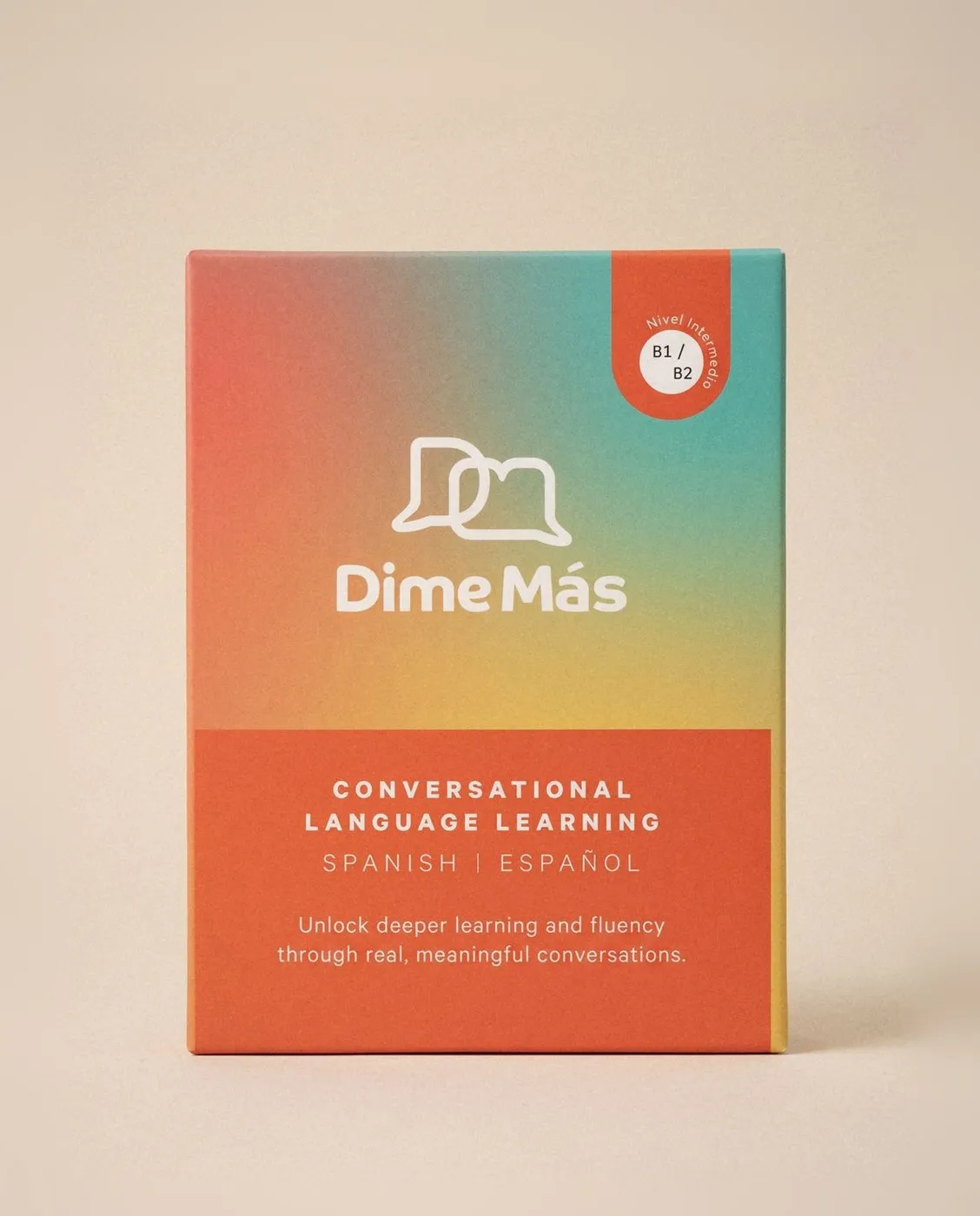
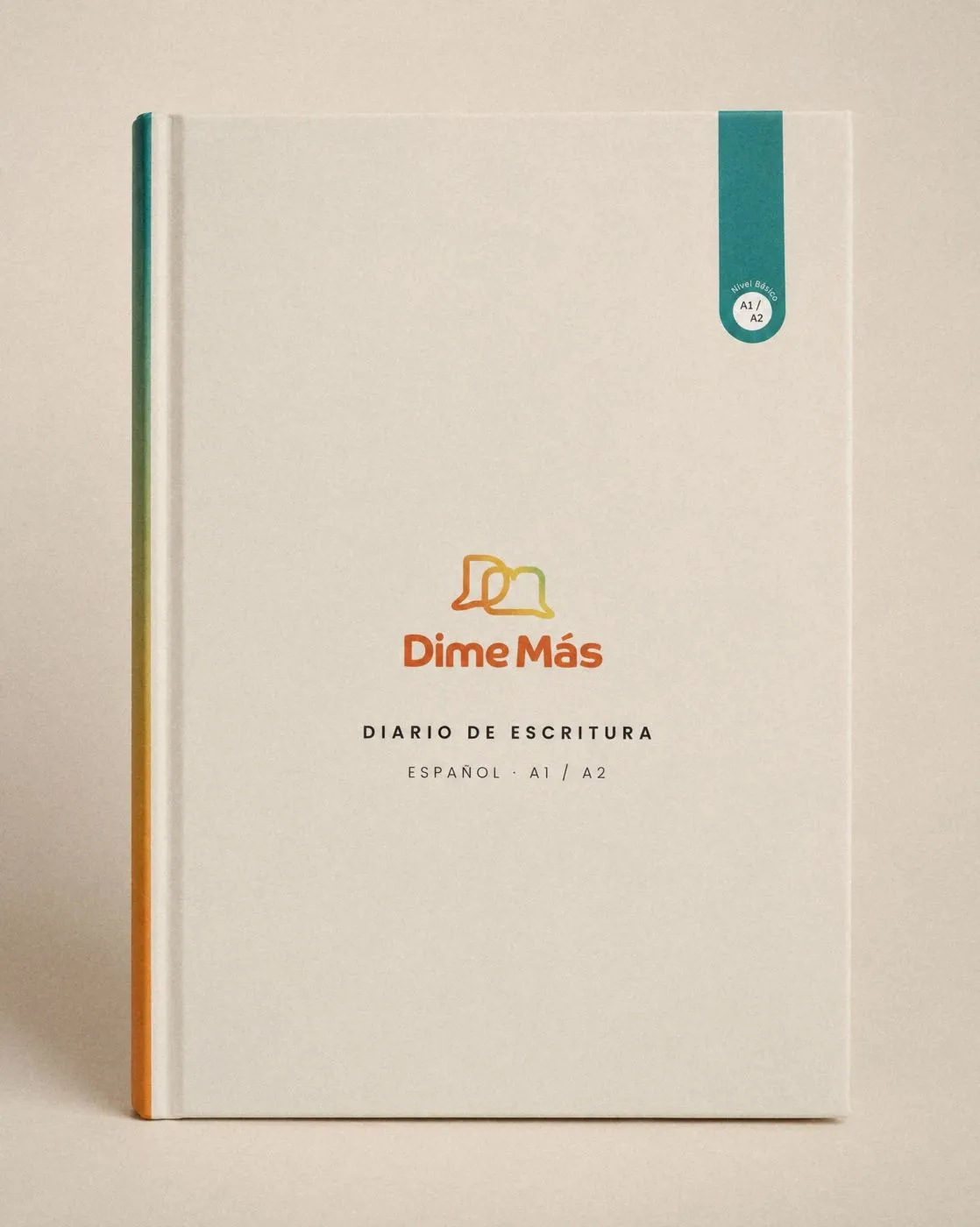
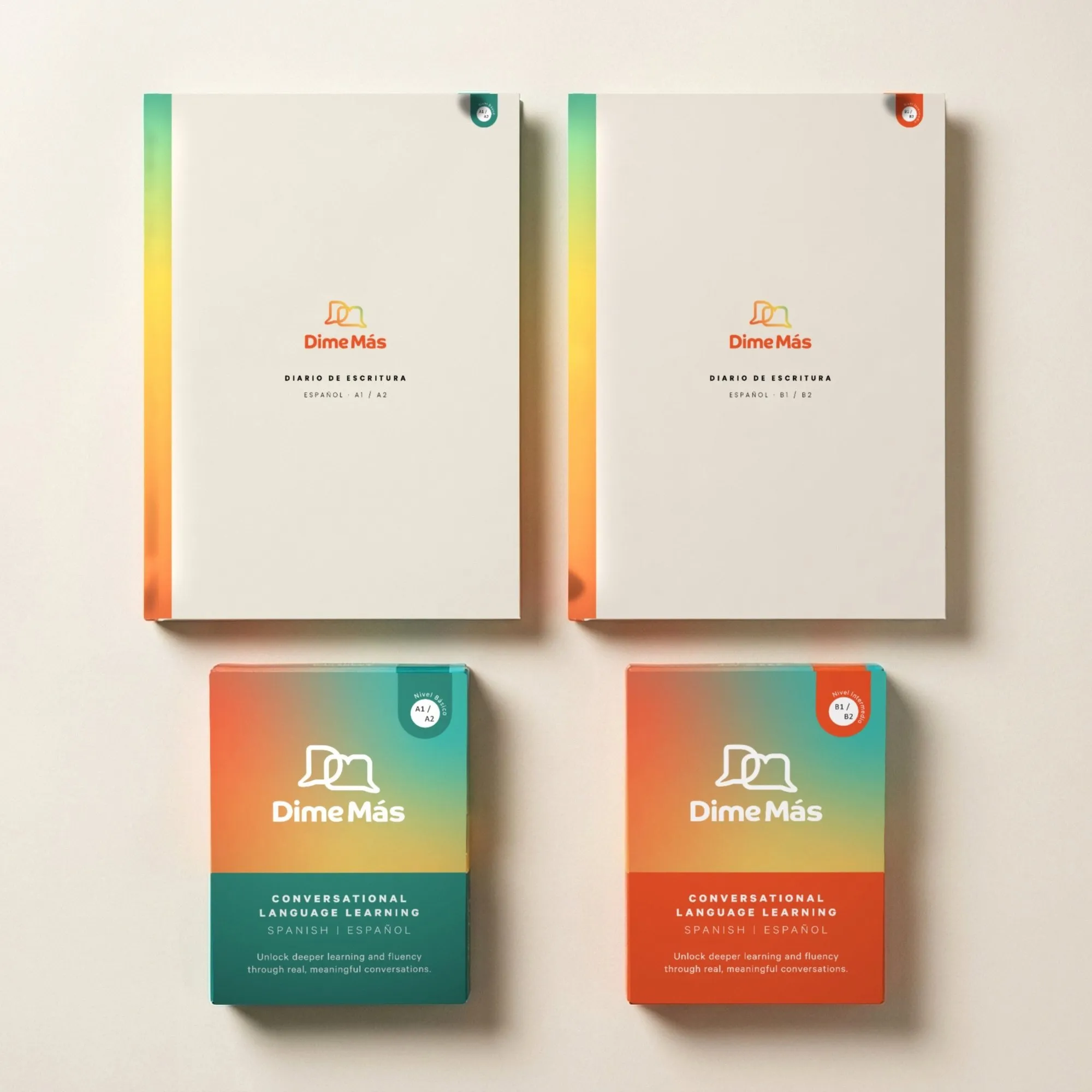
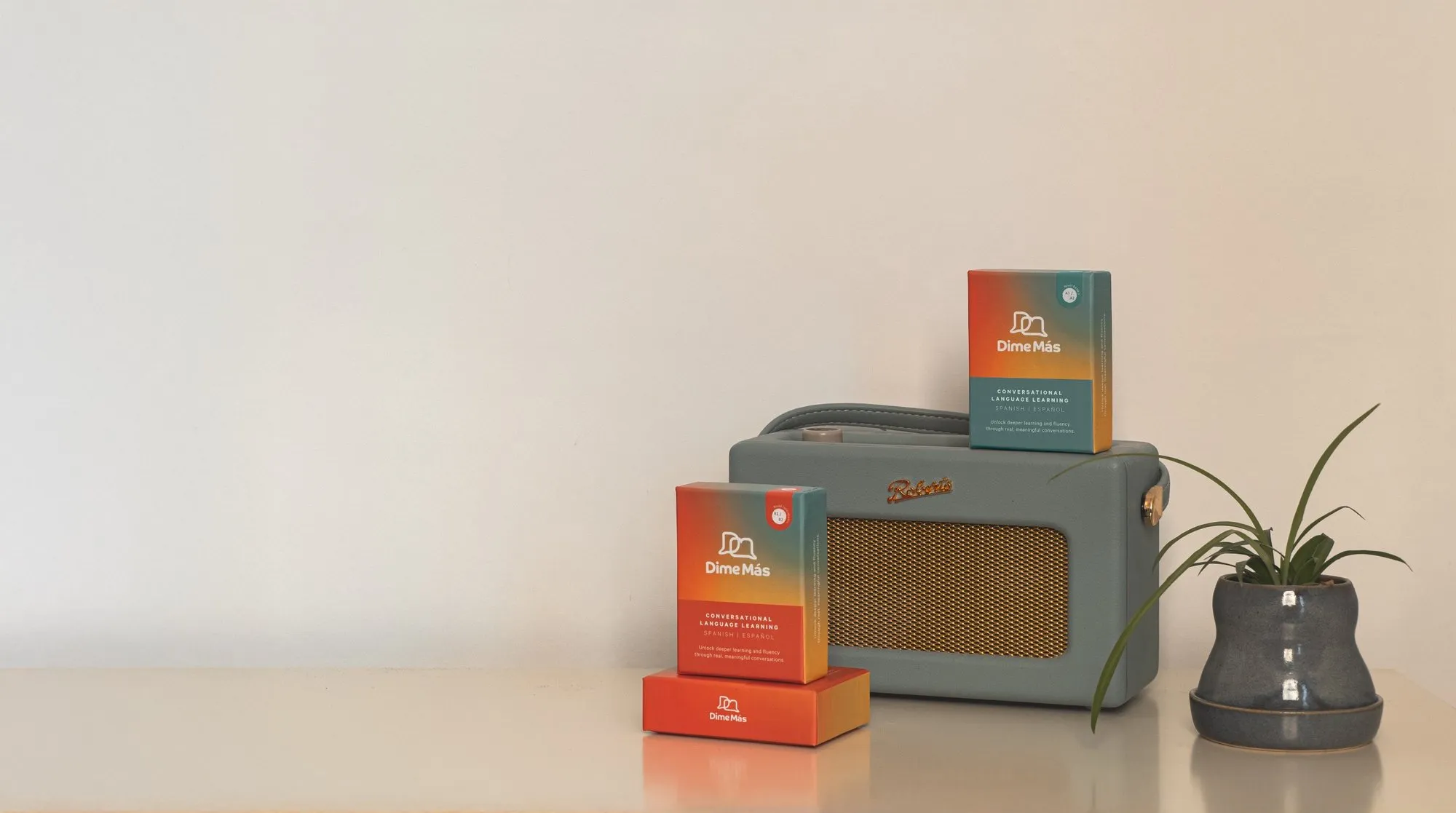
It’s also worth flipping back a couple of weeks now and then and using an old phrase in a new answer. Words stick when they come back round. The Dime Más Journal, which is on its way, builds that in, with twenty weeks of prompts and a weekly review, and you write first and then say it out loud. Until it’s out, any notebook will do the job.
Taking it off the page
Once a week, turn one of your prompts into a question for someone else. Read them your last three lines, or ask them the prompt and listen to their answer. Writing on your own builds up the words, and sharing them builds the nerve you need when you’re sat across from someone.
If they answer in their own language, go with them. If they have a go in yours, give them room. The notebook was there to get you ready, and the conversation is where it pays off.
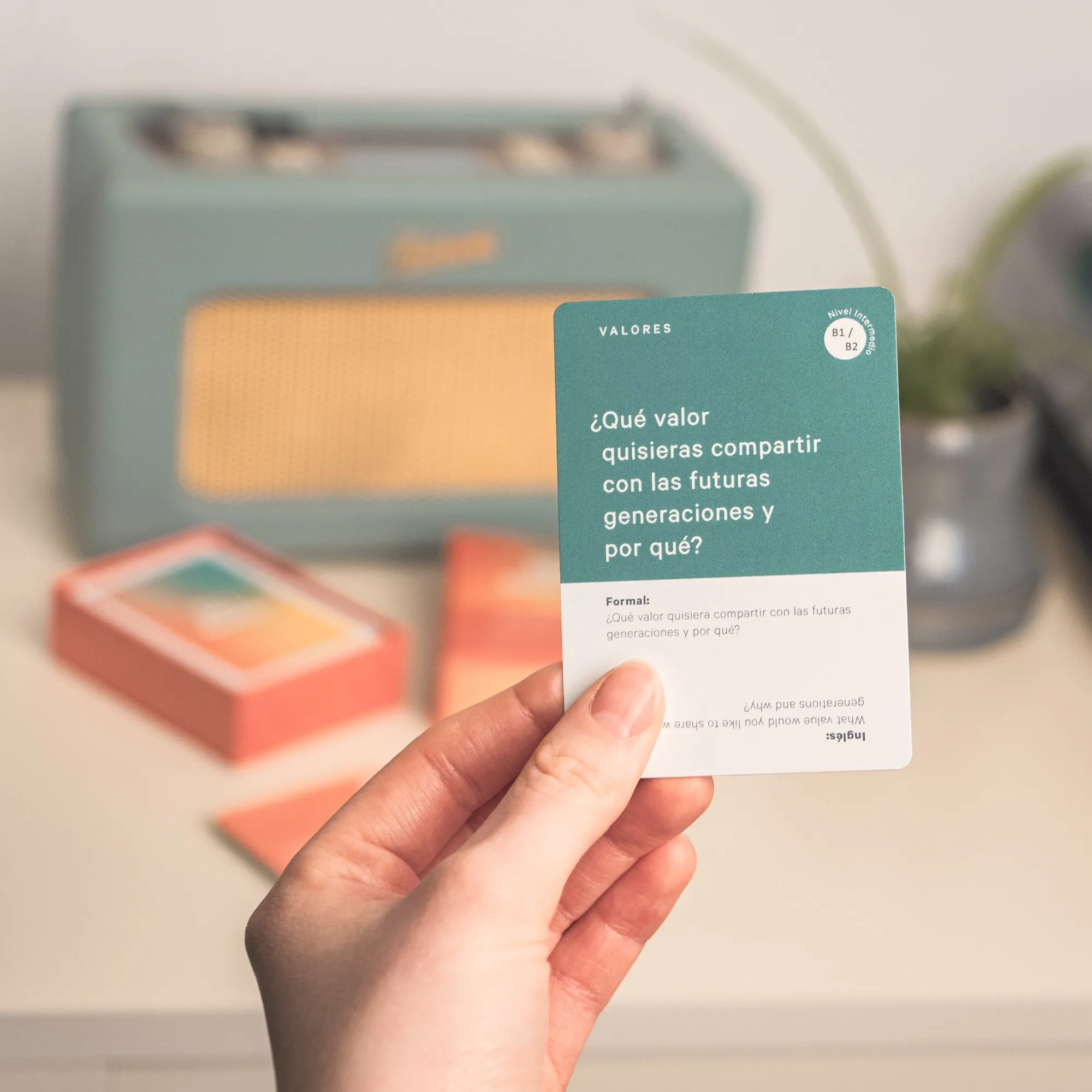
So pick one tonight. Write for ten minutes, then say the last three sentences out loud. If you’d rather start with a question for someone else, there are free ones in the question archive, in English with your language beside them.
Every article is built on published research and checked against the original study. Edited by Cameron Graham.
Related
A question
Which prompt would you write about tonight, and then say out loud?
Get the next one by email →